On this page
- What are on-demand delivery platforms?
- The major delivery platforms for restaurants in 2026
- Aggregator fees: what a delivery order really costs
- Marketplace reach vs direct orders: build both lanes
- Running multiple platforms without wrecking the kitchen
- How to choose your platforms: a 7-point checklist
- Frequently Asked Questions
- Bring every delivery channel into one queue
On-demand delivery platforms moved from experiment to core revenue for most restaurants years ago, and in 2026 the question is no longer whether to be on them. It is which platforms deserve a slot on your pass, what they actually cost you per order, and how much of your delivery business you should be routing through channels you own instead.
This guide breaks down the platform landscape, the real fee math behind a delivery order, and the operational setup that keeps five order sources from turning your kitchen into a wall of beeping tablets. It is written for operators, with numbers you can rerun on your own menu.
What are on-demand delivery platforms?
An on-demand delivery platform connects a hungry customer, a restaurant, and a courier in near real time. The customer orders from their phone, the restaurant confirms and fires the ticket, and a driver picks the food up within minutes. Under that simple loop sit three quite different business models, and the fees differ sharply between them.
Marketplace aggregators
Talabat, Careem, Deliveroo, Uber Eats and DoorDash are marketplaces: they own the customer, the app, and usually the courier fleet. You get discovery in front of millions of users and pay for it with a commission on every order. For a new venue with no audience, that reach is genuinely valuable. For a busy venue with regulars, it gets expensive fast.
White-label ordering channels
White-label systems power ordering on your own website, app, or QR codes, under your brand, with the customer data landing in your database instead of a marketplace's. They typically charge a flat subscription rather than a percentage. If you are weighing options, our guide to the best online ordering system for restaurants compares the models in detail.
Courier and logistics services
The third model is delivery-as-a-service: you take the order through your own channel, and a logistics API dispatches a driver for a flat per-drop fee. It pairs naturally with white-label ordering, because you keep the customer relationship and only rent the last mile.
The major delivery platforms for restaurants in 2026
The shortlist depends on where you operate. In the Gulf, three names dominate most restaurants' delivery mix; globally, a different three lead.
- Talabat: the volume leader across the UAE and much of the GCC, strongest for mainstream reach in Dubai, Abu Dhabi and Sharjah.
- Careem: a super-app play, useful for bundling delivery with the ride-hailing audience it already owns in the region.
- Deliveroo: premium positioning in the UAE and UK, often favored by higher-ticket venues and office-lunch zones.
- Uber Eats and DoorDash: the scale players in North America and much of Europe; DoorDash leads US share, Uber Eats brings the widest international footprint.
- Just Eat Takeaway and regional players: still meaningful in specific European and Asian markets; check share in your own city rather than global headlines.
The practical rule: list where your actual neighborhood orders, not where the biggest brand is. Two platforms with real local demand beat four logins that each trickle.
Aggregator fees: what a delivery order really costs
Marketplace commissions are negotiated and rarely published, but operators commonly report totals between 15% and 35% of the order value depending on market, plan tier, and whether the platform's fleet does the delivery. The commission is only the headline number. The full cost stack usually includes:
- Base commission per order, higher when the platform supplies the courier
- Payment processing, often billed on the gross including delivery fees
- Ads and placement: sponsored listings increasingly decide who gets seen
- Funded promotions and free-delivery campaigns you co-pay to stay competitive
- Refunds and disputed orders, which land on your side more often than not
Run the math on a AED 100 basket. At a 30% all-in take, AED 70 comes back before you touch food cost. Take a typical 32% food cost (AED 32) and roughly 25% labor share (AED 25) and you are holding AED 13 before rent, packaging and utilities. That is why delivery menus often carry a 10-15% price premium and why smart operators treat aggregators as a marketing channel with a cost-per-acquisition, not as their whole delivery business.
Marketplace reach vs direct orders: build both lanes
The platforms are unbeatable at one thing: putting your menu in front of people who have never heard of you. The mistake is letting them own your regulars too. We compared direct online ordering versus third-party delivery apps in depth, and the pattern is consistent: acquisition on the marketplace, retention on your own channel.
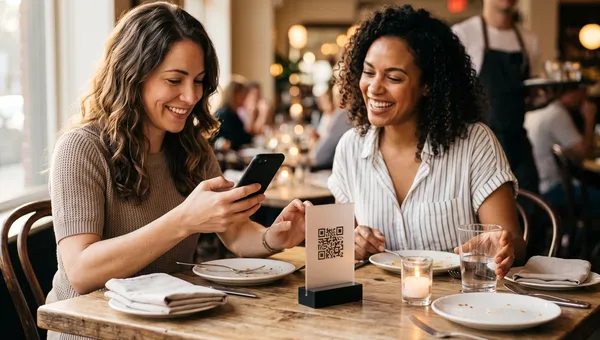
The direct lane does not need to be complicated: a link in your Instagram bio, a QR code on the receipt and table, and commission-free QR ordering for guests already in the room. Every repeat customer you move to a direct channel turns that 15-35% take into margin you keep.
Running multiple platforms without wrecking the kitchen
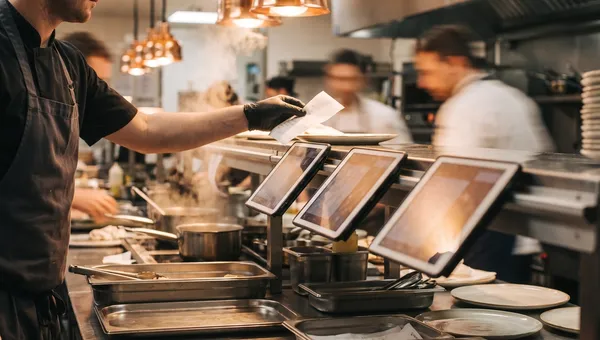
The hidden cost of being on three platforms is the tablet wall: three screens, three alert sounds, staff re-typing orders into the POS during the Friday rush, and the occasional ticket nobody saw. A restaurant order management system that pools dine-in, direct online and aggregator orders into one queue removes the re-typing and the missed tickets in one move.
Downstream, route everything to a kitchen display system so delivery, dine-in and pickup tickets hit the right stations with prep timers, and mark items out of stock once, everywhere, the moment the last portion sells. Nothing burns a platform ranking faster than cancellations on items you no longer have.
If delivery grows into the majority of your volume, the cloud kitchen model takes the same multi-platform playbook and strips out the dining room entirely.
How to choose your platforms: a 7-point checklist
- Local demand: search your cuisine in your area on each app and see who actually surfaces competitors.
- All-in cost: model commission plus payments, ads and promos on your real average basket, not the brochure rate.
- POS and kitchen integration: orders must land in your existing queue automatically, or errors will eat the margin.
- Menu control: how fast can you push price changes and mark items unavailable across every listing?
- Payout terms: weekly versus monthly settlement changes how much working capital you need.
- Data access: at minimum you want item-level sales; customer contact data usually stays with the marketplace.
- Exit friction: month-to-month terms beat long exclusivity deals, and never accept exclusivity without a serious rate cut.
Frequently Asked Questions
Which delivery platforms should a restaurant use?
Start with the one or two marketplaces that genuinely dominate your neighborhood (in the UAE that usually means Talabat plus one of Careem or Deliveroo), and pair them with a direct ordering channel you own. Add a third marketplace only when the first two are integrated cleanly and profitable per order.
How much commission do delivery apps take?
Rates are negotiated per restaurant and rarely published. Operators commonly report all-in costs between 15% and 35% of order value once commission, payment fees, ads and co-funded promotions are counted, with the top of that range applying when the platform's own fleet delivers. Always model the full stack on your own basket, not the quoted commission alone.
Are on-demand delivery platforms worth it for small restaurants?
Usually yes, as an acquisition channel: they put you in front of customers you could not reach otherwise, and delivery-menu pricing can absorb part of the fee. They stop being worth it when regulars order through the marketplace out of habit. That is the moment to push repeat guests toward your own QR or website ordering.
Should a restaurant list on more than one delivery platform?
Multi-platform listing reliably adds volume, but only after the operational side is solved: one consolidated order queue, synced menus, and stock that updates everywhere at once. Without that, every extra platform multiplies errors and late tickets instead of revenue.
Bring every delivery channel into one queue
Quickbuy was built for exactly this setup: Talabat, Careem and Deliveroo orders flow into the same screen as your dine-in and commission-free QR orders, tickets route straight to the kitchen, and stock updates everywhere the moment an item sells out. See Quickbuy's plans and pricing and run your delivery mix from one place instead of five.