On this page
- What's the Difference Between Direct Ordering and Third-Party Delivery Apps?
- The Real Cost: Commission Math That Decides Your Margin
- Pros and Cons at a Glance
- Who Really Owns the Customer?
- When Each Model Makes Sense
- The Hybrid Strategy Most Restaurants Should Run in 2026
- How to Set Up Commission-Free Direct Ordering
- Frequently Asked Questions
- Own Your Orders - and Your Customers - with Quickbuy
Every restaurant in 2026 needs a way for customers to order online - that part is settled. The harder question is who controls those orders. Third-party delivery apps like Uber Eats, DoorDash, Deliveroo and Talabat put your food in front of millions of hungry users overnight, but they take a cut of every sale and keep the customer relationship for themselves. Direct online ordering - through your own website, branded app, or a QR-code menu - flips that equation: you keep the margin, you own the data, and you decide how the experience looks.
This guide compares the two models head-to-head: how each one works, what it really costs, where each one wins, and when to use which. The short version is that it is rarely a pure either/or decision - the most profitable restaurants run a deliberate hybrid, using marketplaces for discovery and a direct channel for repeat business. But getting the balance right is worth tens of thousands of dollars a year in retained margin. Here is how to think it through.
What's the Difference Between Direct Ordering and Third-Party Delivery Apps?
At the simplest level, the difference comes down to who sits between you and your customer.
Third-party delivery marketplaces
A third-party marketplace - Uber Eats, DoorDash, Deliveroo, Talabat, Zomato and similar - is an aggregator that lists many restaurants in one app, runs the customer-facing ordering experience, and, on its full-service plans, provides the delivery drivers. In exchange it charges a commission on every order, typically 15-35% depending on the market and service tier, plus optional fees for promoted placement. The marketplace owns the storefront, the checkout, and - most importantly - the customer.
Direct online ordering
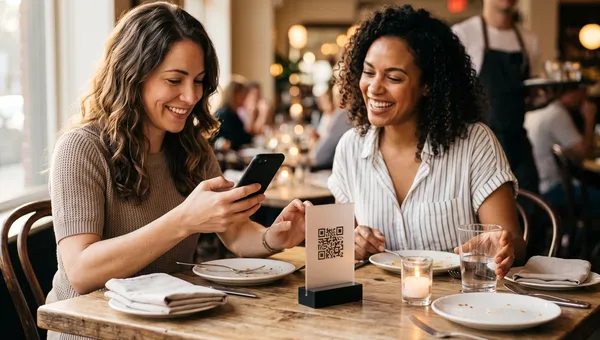
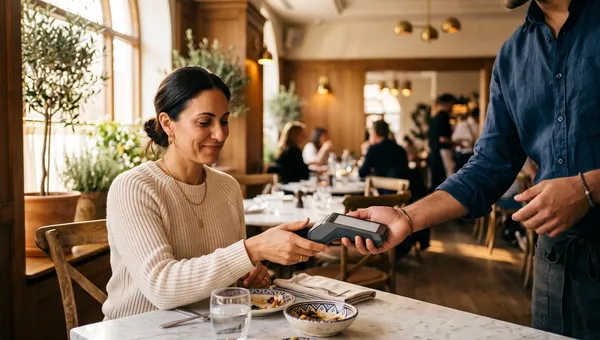
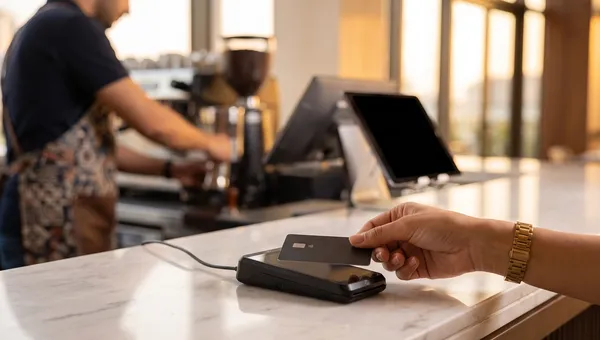
Direct online ordering means customers order through your channels - your website, your branded mobile app, or a QR-code menu on the table - with no marketplace in the middle. Orders drop straight into your kitchen or POS, payment is collected directly, and you keep full control of pricing, branding, promotions, and customer data. Modern commission-free platforms such as Quickbuy bundle the menu, ordering, and payments together, so a restaurant can launch its own ordering channel in a day instead of building software from scratch.
The Real Cost: Commission Math That Decides Your Margin
Restaurant profit margins are famously thin - most full-service venues net somewhere between 3% and 9% after costs. That is why delivery commissions matter so much: a 30% cut on a channel is not 30% off your profit, it can be more than your entire margin on those orders. Understanding the math is the single most important step in this decision.
Consider a typical $25 order on a full-service marketplace plan:
- Order value: $25.00
- Marketplace commission (around 30%): - $7.50
- Card processing, folded into the platform fee: included
- What you keep: about $17.50 - before food and packaging costs
Now the same $25 order through a direct, commission-free channel:
- Order value: $25.00
- Payment processing (around 2.9% + $0.30): - $1.03
- Flat monthly software fee, spread across all orders: a few cents
- What you keep: about $23.90 - before food and packaging costs
That is roughly $6 more retained on every order. For a restaurant doing 1,000 delivery and pickup orders a month, the difference is about $6,000 every month - more than $70,000 a year - flowing back into your business instead of a marketplace's. The more repeat orders you move to your own channel, the bigger that number grows.
Pros and Cons at a Glance
Where third-party delivery apps win
- Instant discovery: millions of active users browsing for somewhere to eat right now.
- No upfront effort: list your menu and you are live; the app handles the technology.
- Delivery logistics: access to a fleet of drivers without hiring or dispatching anyone.
- Low risk to try: you generally pay only when you sell, which makes them easy to test.
Where direct online ordering wins
- Far higher margin: no per-order commission, just low payment and software costs.
- You own the customer data: names, contact details, and full order history are yours.
- Your brand, your experience: your colours, your menu photography, your upsells.
- Marketing and loyalty: run promotions, loyalty rewards, and win-back campaigns freely.
- Control: you set prices, hours, and offers without a marketplace's rules.
Who Really Owns the Customer?
The commission is the cost you can see. The hidden cost of third-party apps is the customer relationship. When someone orders your food through a marketplace, the marketplace - not you - gets their name, email, phone number, and ordering habits. You cannot thank them, you cannot invite them back, and you certainly cannot stop the app from showing them a competitor's ad the next time they open it.
Direct ordering hands that relationship back to you. Every order builds a first-party database you can use to send a 'we miss you' offer, launch a loyalty program, announce a new location, or text a Friday-night special to people who already love your food. As advertising costs keep rising, a list of customers who have already bought from you is one of the most valuable assets a restaurant can own.
When Each Model Makes Sense
Lean on third-party apps when…
- You are brand new and few people know your name yet.
- You have no delivery drivers and do not want to manage logistics.
- You are testing a new neighbourhood, cuisine, or cloud-kitchen concept.
- Discovery - being found by new diners - matters more than margin right now.
Prioritise direct ordering when…
- You already have regulars and repeat customers.
- A meaningful share of your orders is pickup or dine-in.
- You want to protect margin and grow profit, not just revenue.
- You care about building a brand and a customer list you control.
The Hybrid Strategy Most Restaurants Should Run in 2026
For most restaurants the smartest answer is not 'quit the apps' or 'ignore direct ordering' - it is to use each channel for what it does best. Treat third-party marketplaces as a paid acquisition channel: a way to be discovered by new diners. Then deliberately convert those one-time app customers into repeat direct customers, where you keep both the margin and the relationship.
Practical tactics that work:
- Drop a small flyer or branded card with a QR code into every delivery and takeaway bag, inviting customers to order directly next time.
- Offer a direct-only perk - a free side, a discount code, or loyalty points - that the marketplace cannot match.
- Keep your direct prices a little lower than the app; with no commission, you can afford to.
- Put a QR-code menu on every table so dine-in guests order directly and join your list.
- Capture contact details at checkout and follow up with SMS or email win-back offers.
Over time, this shifts your highest-value repeat customers onto a channel you own, while the marketplaces keep feeding you new faces at the top of the funnel.
How to Set Up Commission-Free Direct Ordering
Launching your own ordering channel is far simpler than it was a few years ago. The basic steps:
- Build a digital menu - ideally with photos - and generate QR codes for tables, the counter, and your packaging.
- Turn on online ordering for pickup, delivery, and dine-in from your own branded page.
- Connect payments so money lands directly in your account.
- Route orders into your kitchen or POS so nothing is re-keyed by hand.
- Promote the channel everywhere - receipts, bags, social media, and in-store signage.
An all-in-one platform like Quickbuy combines the QR menu, commission-free online ordering, and POS in one system, so orders from every channel land in the same place and you keep the full value of each sale. That is the difference between renting your customers from a marketplace and owning them outright.
Frequently Asked Questions
Are third-party delivery apps worth it for restaurants?
They can be - especially for new restaurants that need discovery or lack their own delivery drivers. The trade-off is steep commissions (often 15-35%) and losing the customer relationship. The most profitable approach is to use the apps to get found, then move repeat customers to a commission-free direct channel.
How much commission do delivery apps charge in 2026?
It varies by market and plan, but full-service delivery commissions typically run 15-35% per order, with the higher end reflecting plans that include driver delivery plus marketing placement. Pickup-only plans cost less, and promoted listings add extra cost on top.
Can I use both third-party apps and my own ordering system?
Yes - and most successful restaurants do. Use marketplaces for new-customer discovery and your own direct ordering for repeat business. The goal is to gradually shift loyal, high-frequency customers to the channel you control while keeping the apps for reach.
How do I get customers to order directly instead of through Uber Eats or DoorDash?
Give them a reason. Add a QR code and flyer to every bag, offer a direct-only discount or loyalty reward, keep your own prices a little lower, and put QR-code menus on every table. Small incentives at the moment of the meal convert app users into direct regulars surprisingly fast.
Is direct online ordering cheaper than third-party delivery?
Almost always. Instead of a 15-35% commission, you pay only standard payment processing (around 2.9% plus a small fixed fee) and a flat software subscription. On steady order volume, that can save a busy restaurant tens of thousands of dollars a year.
Own Your Orders - and Your Customers - with Quickbuy
Third-party apps will always have a place for discovery, but they should not own your margin or your customer list. With Quickbuy you can launch a commission-free direct ordering channel - QR menus, online ordering, and POS in one platform - so every repeat order keeps more profit in your pocket and every customer becomes someone you can bring back. Explore Quickbuy plans and pricing to find the right fit for your restaurant and start keeping what you earn.