On this page
- What Restaurant Marketing Software Actually Does
- The Six Tools That Matter in 2026
- Why Direct Channels Beat Paid Ads in 2026
- How to Choose: A Five-Point Checklist
- What Restaurant Marketing Software Costs in 2026
- Five Mistakes to Avoid
- Frequently Asked Questions
- Turn Guest Data Into Repeat Orders with Quickbuy
Most restaurants don't have a visibility problem. They have a repeat visit problem. Industry studies keep landing on the same numbers: winning a new guest costs five to seven times more than bringing back an existing one, and returning guests spend up to 67 percent more per order. Yet plenty of independent operators still pour their marketing budget into discounts and delivery app promotions, renting attention instead of owning it.
Marketing software promises to fix that, but the category is crowded and confusing. CRM platforms, loyalty apps, email tools, SMS blasters, review managers, reservation systems: every vendor claims it will grow your revenue. This guide cuts through the noise. It covers what restaurant marketing software actually does, the six tools that matter in 2026, what you should expect to pay, and how to pick a stack that pays for itself in orders rather than impressions.
What Restaurant Marketing Software Actually Does
Strip away the branding and every restaurant marketing tool does some mix of four jobs: capture guest data, segment those guests into audiences, send them a reason to come back, and measure whether they did. The best platforms close that loop automatically. A guest orders pad thai on a Tuesday, doesn't return for three weeks, and gets a text with their favorite dish and a small incentive. That's the whole game.
The real difference between tools is where the data comes from and how much of the loop runs on its own. Standalone email tools need imported lists. Loyalty apps capture data at checkout. Platforms built around direct ordering capture the richest data of all: every item, every order time, every address, tied to a real person.
The Six Tools That Matter in 2026
1. Guest CRM and data platform
A restaurant CRM is the memory of your business. It stores who your guests are, what they order, how often they visit, and how much they spend. Segmentation is the payoff: your top 100 spenders, the weekday lunch regulars who vanished, the first timers from last weekend. If you're comparing options, our guide to the best restaurant CRM software breaks down features and pricing in detail.
2. Loyalty and rewards
Loyalty is the highest leverage retention tool a restaurant has. Points, punch cards, and tiered perks all work when they're simple enough to explain in one sentence at the counter. Programs that run through your own ordering channel beat plastic cards because enrollment happens automatically. We covered program design, reward math, and rollout in our guide to restaurant loyalty programs.
3. Email and SMS automation
Email is still the cheapest way to reach guests at scale, and SMS actually gets read: open rates above 90 percent within minutes, against roughly 20 percent for email. The trick is automation. Welcome series, win-back campaigns triggered by inactivity, birthday offers. Blasting the whole list with the same promotion just teaches guests to ignore you. For channel ideas worth automating, see these restaurant marketing strategies that actually work.
4. Review and reputation management
Guests check reviews before trying somewhere new, and Google watches review velocity and reply rate. Reputation tools request reviews after a visit, route unhappy feedback to you privately first, and let you answer everything from one inbox. A steady stream of recent four and five star reviews is a ranking asset you own outright.
5. Direct online ordering: the marketing channel most owners overlook
Your ordering channel isn't just fulfillment. It decides who owns the guest relationship. Third-party apps keep the customer data and charge 15 to 30 percent per order. Your own channel captures every guest automatically and feeds every other tool on this list. That difference compounds over time; we ran the numbers in direct ordering versus third-party delivery apps.
If you're starting from scratch, pick the ordering system first and the marketing add-ons second. Our buyer's guide to the best online ordering systems for restaurants explains what to look for, including commission-free pricing.
6. Analytics and reporting
None of it matters if you can't see what worked. Good reporting ties every campaign to actual orders and revenue, not clicks. Look for cohort views (do the guests you won in March still order in June?), item level trends, and campaign attribution in one place, like the restaurant analytics built into Quickbuy.
Why Direct Channels Beat Paid Ads in 2026
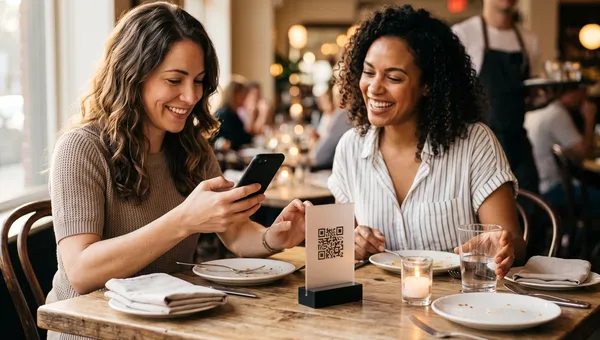
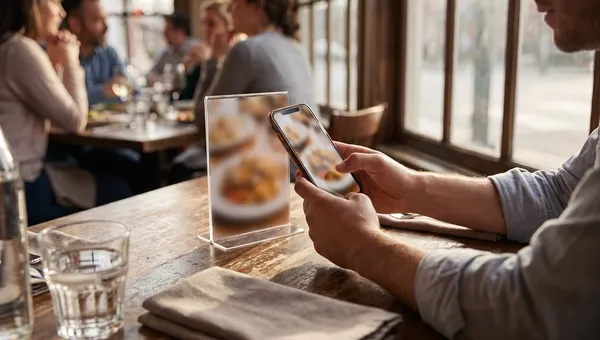
Customer acquisition costs on paid channels climbed again this year, and delivery marketplaces now sell sponsored placement, which means you're bidding against the restaurant next door to reach people who already ordered from you. Owned channels flip that math. Your guest list, your loyalty base, and your QR menu traffic cost almost nothing to reach again, and they convert far better because those people already know your food.
That's why the operators winning in 2026 treat marketing software and ordering infrastructure as one decision instead of two separate purchases. Data flows without spreadsheets, and every promotion lands on a channel where the margin stays intact.
How to Choose: A Five-Point Checklist
- Own your guest data. If a vendor won't export your full guest list with order history, walk away. The data is the asset; the software is replaceable.
- Demand POS and ordering integration. Marketing tools that can't see orders only count clicks. Native integration with your restaurant POS software and ordering channel is what makes real automation possible.
- Check the automation library. You want ready-made triggers for lapsed guests, first visits, birthdays, and big spenders, not a blank canvas you have to configure yourself.
- Question the pricing model. Flat monthly pricing keeps incentives clean. Per-message fees and percentage-of-sales pricing punish you for succeeding.
- Measure in orders. Ask every vendor one question: can you show me the revenue this campaign generated? If the answer involves impressions, keep looking.
What Restaurant Marketing Software Costs in 2026
Standalone tools add up fast. Typical prices this year: email platforms run 30 to 100 dollars a month, SMS adds one to five cents per message, loyalty apps charge 50 to 200 dollars per location, review managers sit between 100 and 300 dollars, and restaurant CRM suites go for 150 to 500 dollars a month. Stack four tools and you're paying over 400 dollars per location before sending a single campaign, with your data scattered across four dashboards.
The alternative is an all-in-one platform where ordering, QR menus, loyalty, and guest data live in one system with flat pricing. Quickbuy takes that approach: every direct order builds your guest database automatically, so marketing starts from data you already own instead of a list you have to buy or rebuild.
Five Mistakes to Avoid
- Buying marketing software before fixing the ordering channel that feeds it data.
- Blasting the whole list with one offer instead of segmenting by behavior.
- Discounting for guests who would've paid full price; save offers for the lapsed.
- Ignoring SMS compliance; always collect opt-ins and honor stop requests immediately.
- Chasing social media followers while your guest database sits unused.
Frequently Asked Questions
What is restaurant marketing software?
It's any tool that helps a restaurant collect guest data and use it to drive visits: CRM platforms, loyalty programs, email and SMS automation, review management, and the analytics that tie campaigns to revenue. Modern platforms bundle several of these jobs into one system.
How much should a small restaurant budget for it?
Standalone stacks usually land between 200 and 600 dollars per location per month. All-in-one platforms that bundle ordering and marketing typically cost less than the sum of separate tools, and the guest data they capture is what makes campaigns work in the first place, so start there.
Do independent restaurants really need a CRM?
If you take more than a few hundred orders a month, yes. Without one you're marketing from memory. Even a basic guest database with visit counts and last order dates beats sending the same offer to everyone.
Which works better for restaurants, email or SMS?
Use both, for different jobs. SMS wins for time-sensitive offers because most texts get read within minutes. Email wins for menus, stories, and anything that needs images. The pair beats either one alone, which is why good platforms send both from a single guest database.
Can marketing software replace third-party delivery apps?
For most restaurants the realistic goal is rebalancing, not replacing. Marketplaces can stay as a discovery channel while loyalty, SMS, and a smoother direct ordering experience move your regulars to the channel where you keep the margin and the data.
Turn Guest Data Into Repeat Orders with Quickbuy
Quickbuy gives restaurants the foundation marketing software depends on: commission-free online ordering, QR menus, and a POS that captures every guest and every order in one place. Instead of stitching five subscriptions together, you get the data layer and the ordering channel in a single system that marketing tools plug into naturally.
See how it fits your restaurant on Quickbuy's pricing page, or talk to our team about moving your regulars onto a channel you own.