On this page
- What is a Restaurant Loyalty Program?
- Why Customer Retention Matters More Than Ever
- Types of Restaurant Loyalty Programs
- Common Mistakes Restaurants Make
- How Loyalty Programs Increase Revenue
- Digital vs Traditional Loyalty Programs
- How Quickbuy Powers Modern Loyalty Programs
- Loyalty + QR + Online Ordering = Full Control
- Real Example: Before vs After Loyalty Implementation
- Best Practices for Loyalty Programs in 2026
- Conclusion
In today’s restaurant industry, attracting customers is only half the battle - the real challenge is getting them to come back.
With rising competition, increasing customer acquisition costs, and heavy reliance on third-party delivery platforms, many restaurants are stuck in a cycle of one-time orders without building long-term relationships.
This is where a restaurant loyalty program becomes essential.
A well-structured loyalty program doesn’t just reward customers - it transforms your business model by increasing repeat visits, boosting customer lifetime value, and reducing your dependency on external platforms.
In 2026, loyalty programs are no longer optional. They are a core growth engine for modern restaurants.
And more importantly, they must be fully digital, data-driven, and integrated into your ordering and operational systems - which is exactly what platforms like Quickbuy enable.
What is a Restaurant Loyalty Program?
A restaurant loyalty program is a system designed to encourage repeat purchases by rewarding customers for their continued business.
At its core, the concept is simple:
👉 The more a customer orders, the more they are rewarded
However, modern loyalty programs go far beyond basic incentives. They are built to:
- Track customer behavior
- Personalize offers
- Automate rewards
- Increase engagement
Common types of rewards include:
- Points earned per order
- Cashback or wallet credit
- Free items after a number of purchases
- Exclusive discounts for loyal customers
When implemented correctly, a loyalty program becomes a powerful mechanism to drive predictable, repeat revenue.
Why Customer Retention Matters More Than Ever
Most restaurants focus heavily on attracting new customers through ads, promotions, or delivery platforms.
But this approach has a major flaw:
👉 Acquiring new customers is expensive
👉 Retaining customers is far more profitable
Studies consistently show that repeat customers:
- Spend more per order
- Order more frequently
- Are more likely to recommend your brand
In contrast, relying only on new customers creates unstable revenue and higher marketing costs.
Additionally, when customers order through delivery platforms like Deliveroo or Uber Eats, you don’t truly “own” that customer relationship.
You don’t control:
- Customer data
- Communication
- Retention strategies
This means every order is essentially starting from zero.
A loyalty program solves this by helping you:
- Build direct relationships
- Capture customer data
- Drive repeat engagement
Types of Restaurant Loyalty Programs
Not all loyalty programs are created equal. Choosing the right model depends on your restaurant type, pricing strategy, and customer behavior.
Points-Based Programs
Customers earn points for every order and redeem them for rewards.
This is one of the most flexible and scalable models.
Cashback Programs
Customers receive a percentage of their spend back as credit for future orders.
This encourages immediate repeat purchases.
Visit-Based Rewards
Classic “Buy 9, get 1 free” systems.
Simple and effective, especially for cafes and quick-service restaurants.
Tiered Loyalty Programs
Customers unlock better rewards as they spend more.
This creates a sense of progression and exclusivity.
Subscription-Based Loyalty
Customers pay a monthly fee in exchange for perks such as:
- Free delivery
- Exclusive discounts
- Priority service
This model creates recurring revenue.
Common Mistakes Restaurants Make
Many restaurants attempt loyalty programs but fail to see results due to poor implementation.
Lack of Digital Integration
Paper-based systems or disconnected tools limit scalability and tracking.
No Data Utilization
Without analyzing customer behavior, offers remain generic and ineffective.
Overcomplicated Systems
If customers don’t understand how rewards work, they won’t engage.
No Direct Ordering Strategy
Running a loyalty program without direct ordering defeats the purpose.
You end up rewarding customers who still order through third-party platforms.
How Loyalty Programs Increase Revenue
A well-executed loyalty program directly impacts your bottom line.
Increased Order Frequency
Customers return more often when they are rewarded.
Higher Average Order Value
Customers are more likely to add items to reach rewards thresholds.
Reduced Marketing Costs
Retention reduces the need for expensive acquisition campaigns.
Stronger Brand Loyalty
Customers develop a preference for your restaurant over competitors.
Better Forecasting
Repeat customers create predictable revenue patterns.
Digital vs Traditional Loyalty Programs
Traditional loyalty programs are outdated and inefficient.
They are typically:
- Paper-based
- Difficult to track
- Not personalized
Digital loyalty programs, on the other hand:
- Automate reward systems
- Track detailed customer data
- Enable personalized offers
- Integrate with ordering systems
In 2026, digital loyalty is the only viable approach.
How Quickbuy Powers Modern Loyalty Programs
This is where most restaurants fall short - they treat loyalty as a separate tool.
Quickbuy integrates loyalty directly into your entire restaurant system.
This means:
- Loyalty is automatically linked to every order
- Rewards are applied in real-time
- Customer behavior is tracked seamlessly
- Offers can be personalized based on data
Instead of managing multiple tools, everything works within one unified system.
Loyalty + QR + Online Ordering = Full Control
The real power of a loyalty program is unlocked when it is combined with:
- QR menu ordering
- Online ordering
- Direct customer engagement
With Quickbuy:
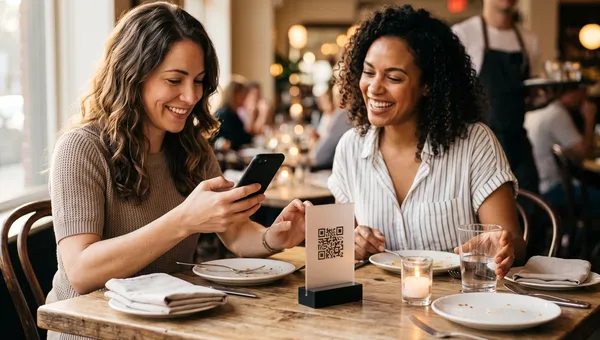
- Customers scan a QR code
- They place an order directly
- They earn rewards instantly
No third-party platforms involved.
This allows you to:
- Own your customer data
- Increase margins
- Build long-term relationships
Real Example: Before vs After Loyalty Implementation
Before loyalty:
- Customers order once and disappear
- Heavy reliance on delivery apps
- No customer data
After implementing a digital loyalty system with Quickbuy:
- Customers return more frequently
- Direct orders increase
- Revenue becomes more predictable
- Marketing becomes more targeted
Best Practices for Loyalty Programs in 2026
To maximize results, follow these principles:
- Keep rewards simple and easy to understand
- Make the entire experience digital
- Focus on direct ordering channels
- Use data to personalize offers
- Promote your loyalty program consistently
- Track performance and optimize regularly
Conclusion
In 2026, restaurant success is no longer just about great food - it’s about building relationships.
A modern loyalty program helps you:
- Turn one-time customers into repeat buyers
- Increase revenue without increasing costs
- Reduce dependency on third-party platforms
- Build a strong, data-driven business
Quickbuy makes this possible by combining loyalty, ordering, and operations into one unified system.
If you want to grow sustainably and compete in today’s market, investing in a digital loyalty program is no longer optional - it’s essential.