On this page
- How does Ramadan change a restaurant's day?
- How should you plan your Ramadan menu?
- How do you prepare stock for Ramadan?
- How do you staff the iftar rush?
- How do you run the floor at iftar?
- How do you track Ramadan performance?
- Common Ramadan mistakes
- Frequently Asked Questions
- Get ready before the first night
Preparing a restaurant for Ramadan means planning for two different businesses in one day: quiet fasting hours, then a burst of orders around sunset, then late service that can run well past midnight. Ramadan 2027 is expected to begin in early February, depending on the moon sighting, so the work should start in December: the menu, the stock, the rota and the floor.
Most restaurants that struggle in Ramadan don't get the food wrong. They run their normal week's pattern into a month that breaks it, then spend the first ten nights catching up. This guide walks through the Ramadan day, the menu, stock, staffing, the iftar floor and how to read the numbers while the month is still running.
How does Ramadan change a restaurant's day?
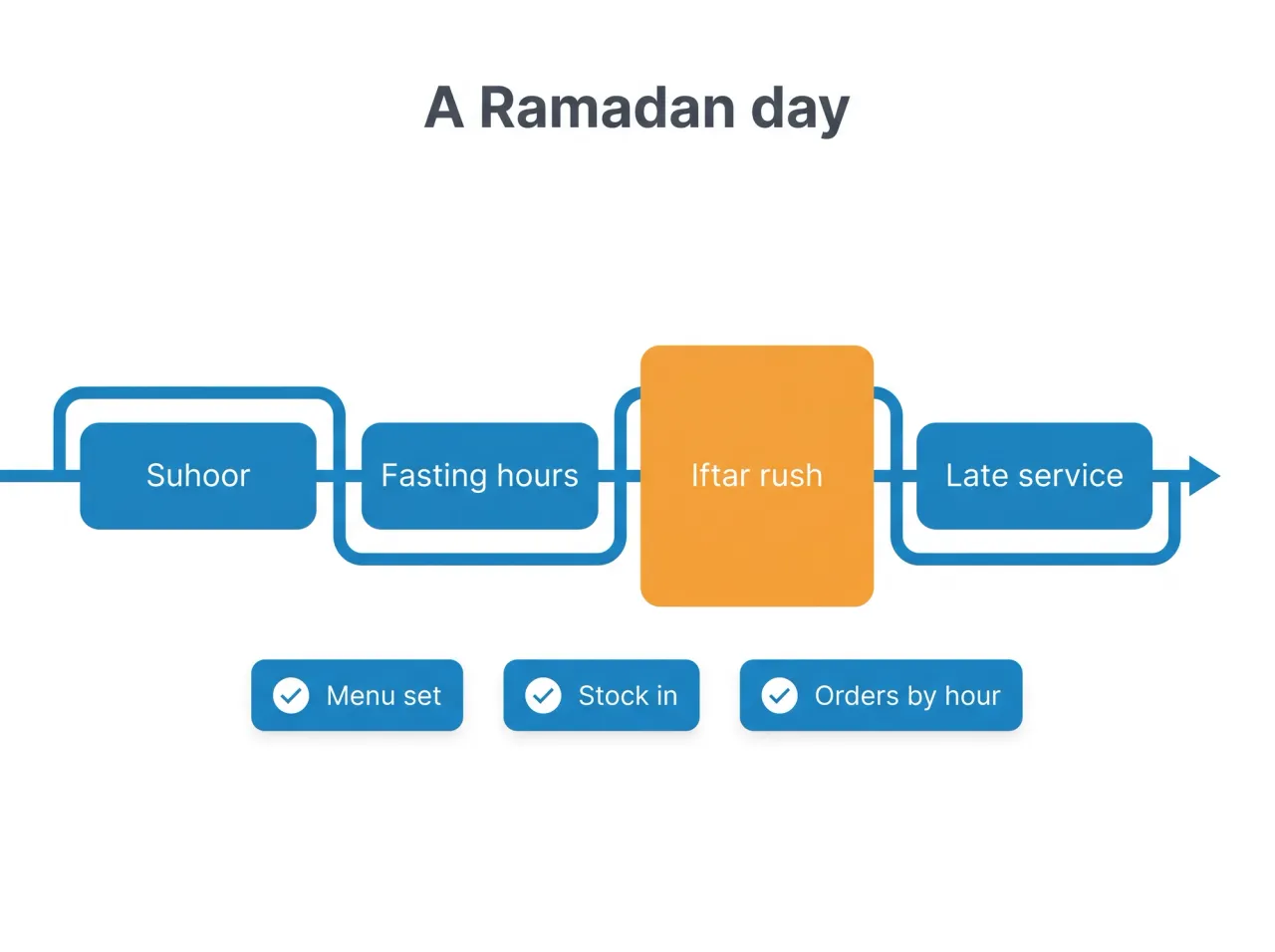
The day splits into four parts, and each needs something different from your team:
- Suhoor: the pre-dawn meal. Only some venues serve it, usually late-night cafes and hotel restaurants.
- Fasting hours: daytime trade drops sharply for most concepts. Takeaway and orders for later collection matter more than dine-in.
- The iftar rush: guests arrive before sunset and everyone wants food at the same moment. This is the hour the whole day is built around.
- Late service: families and groups stay long after iftar, order second rounds and desserts, and often book big tables.
Rules on daytime dining and Ramadan operating hours are set locally and have changed in recent years, so check the current guidance from your licensing authority before you publish your hours.
How should you plan your Ramadan menu?
Build the menu around the moment the fast breaks. Guests start with dates, water or laban, then soup, then mains, and they want the first course on the table at sunset, not ten minutes after it.
- Offer an iftar set or box at one price. It speeds up ordering, makes prep predictable and lets you plan portions per guest.
- Shorten the a la carte list for the rush. Fewer dishes means a faster pass when every table orders at once.
- Prepare the first course before sunset: dates, drinks and soup should be ready to go out the moment the call to prayer starts.
- Keep late-evening favourites, desserts and shareable plates on for the hours after iftar, when groups order again.
Make the change before the first night, not during it. With restaurant menu management that lets you add a Ramadan set and pull dishes in minutes, the switch takes an afternoon, and you switch back the same way after Eid.
How do you prepare stock for Ramadan?
Demand shifts toward a handful of items, and suppliers are stretched at the same time. Dates, laban, juices, lentils, lamb and fresh herbs all move faster than usual, and the iftar menu uses them every single night.
Order earlier and in steadier quantities rather than chasing shortages in week two. The simplest guard is to reorder from what the kitchen actually used the night before, which is exactly what our guide to restaurant purchasing software covers.
How do you staff the iftar rush?
Your team is often fasting too, so the rota has to work for them as well as for guests:
- Move shift start times later, so the strongest part of each shift lands on the iftar rush and late service.
- Stagger the team's own iftar. Someone covers the floor while others break their fast, then they swap.
- Put your most experienced people on the pass and the busiest section for the first hour after sunset.
- Plan the Eid weekend early, because it's when people most want time off.
Our guide to restaurant staff scheduling covers how to build the rota itself.
How do you run the floor at iftar?
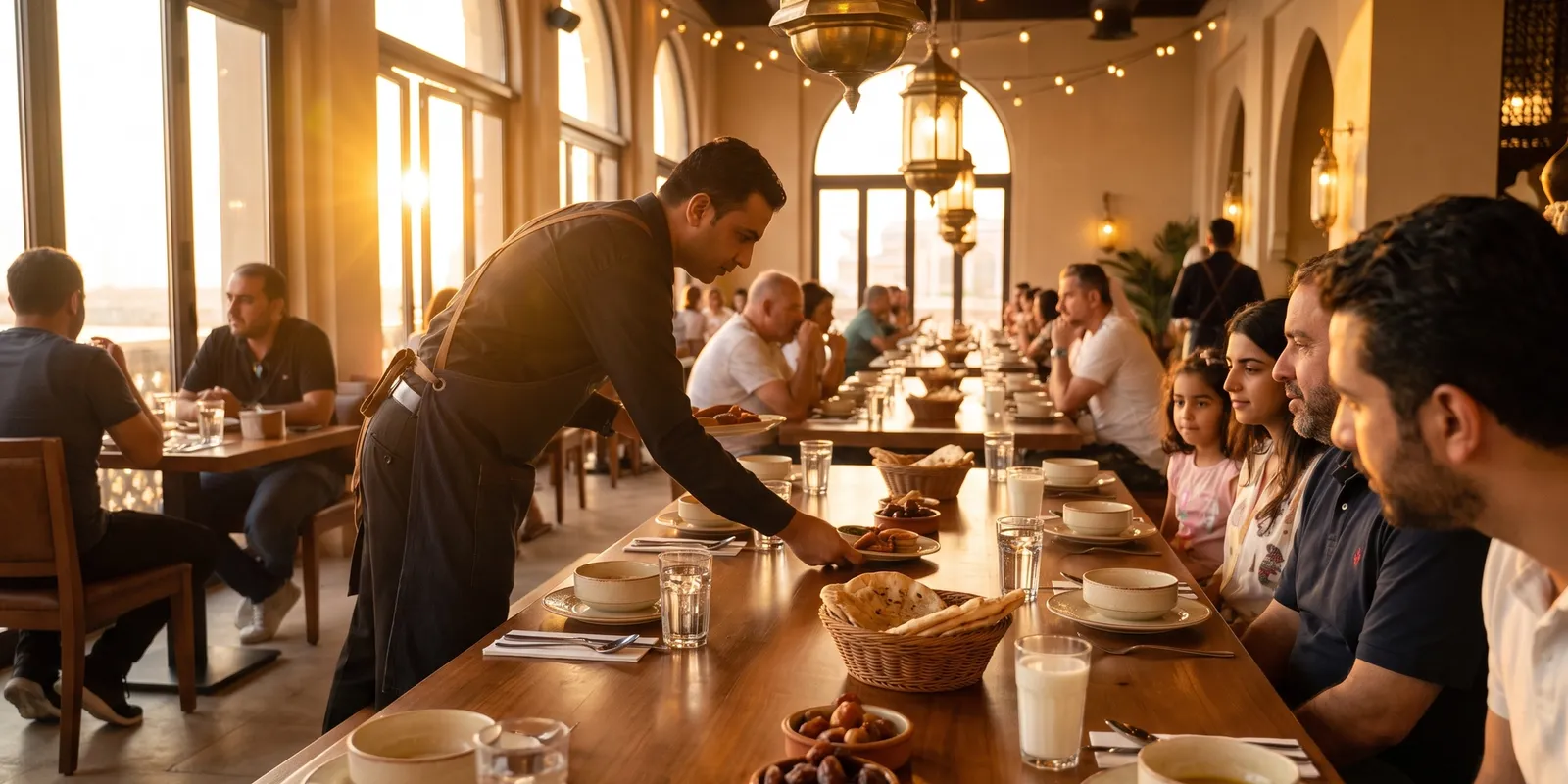
Seat everyone before sunset. A table that sits down at the call to prayer has already missed the moment, and the kitchen gets their order at the worst possible time. Groups are bigger in Ramadan, so set large tables in advance, using a layout built for groups like the ones in our restaurant floor plan guide, and give each one a single server for the first round.
After the first course, let guests order second rounds from the table. QR ordering takes the pressure off servers when every table wants drinks and desserts at once, and restaurant table management shows which tables are occupied so the host can seat walk-ins without guessing.
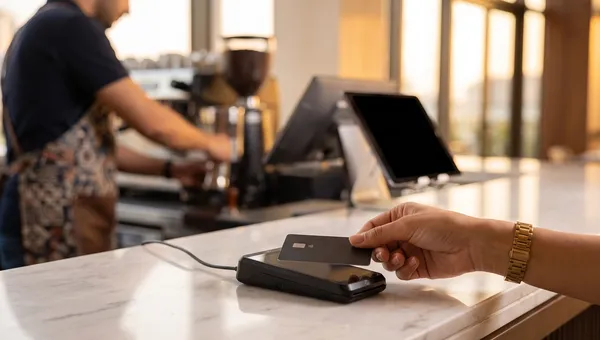
Big groups also mean bigger bills. Letting the table split the bill from their phones saves a slow end to the night, as our guide to pay at table explains.
How do you track Ramadan performance?
Normal weeks are a poor guide to Ramadan, so measure the month on its own terms. Look at sales by hour after the first three nights, and rebuild the rota and prep around what actually happened. Check which iftar dishes sell and what each one earns, then cut the slow ones in week two instead of carrying them all month.
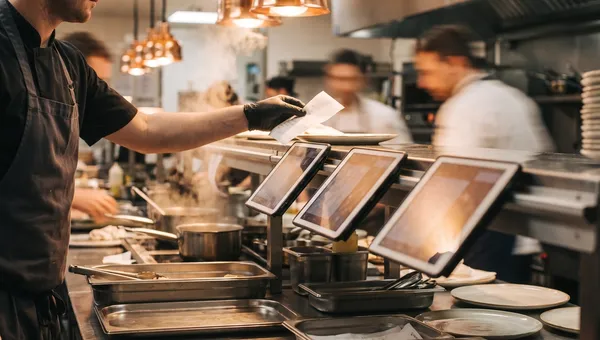
In Quickbuy, an iftar set can be a combo with its own price, and guests see your Ramadan menu the next time they open the QR menu. Orders from QR and staff land on the same order board, which flags late orders while the kitchen is still working through the rush. The live sales dashboard breaks the day down by hour, and top-selling items show their margin, so you can see whether the iftar set is actually paying. Day-close requisitions turn the night's usage into the next order, so dates and laban don't run out halfway through the month. For the kitchen side, restaurant order management shows how orders move from placed to served.
We show sales by hour on the dashboard because Ramadan breaks every normal pattern. A restaurant that does steady lunch and dinner the rest of the year might do almost nothing at noon and most of its covers in the two hours after sunset. Staff and prep off last month's numbers and you're wrong twice a day. Look at the hourly view after the first three nights and rebuild around what actually happened.
Common Ramadan mistakes
- Running the full menu through the iftar rush.
- Seating guests at the call to prayer instead of before it.
- Leaving the rota on normal hours and covering the rush with overtime.
- Forgetting that the team is fasting too.
- Ordering stock for a normal week and running out of dates by the second weekend.
Frequently Asked Questions
How do restaurants prepare for Ramadan?
Start about two months ahead. Plan an iftar set or box and a shorter menu for the rush, place larger and earlier orders for dates, laban and juices, move shift times later and stagger the team's own iftar, and set up big tables for groups. Then track sales by hour from the first nights and adjust.
When does Ramadan start in 2027?
Ramadan 2027 is expected to begin in early February. The exact date depends on the moon sighting, so confirm it closer to the time and plan your menu and stock changes to be ready a few days before.
How do you staff a restaurant during iftar?
Shift start times move later so your strongest people are on during the iftar rush and late service. Stagger staff breaks so the team can break their own fast, and put your most experienced people on the pass for the first hour after sunset.
What should be on an iftar menu?
Dates and water or laban to break the fast, then soup, then mains, with juices and desserts for later in the evening. An iftar set at one fixed price is the easiest way to serve a full room at the same moment.
Should restaurants stay open during the day in Ramadan?
It depends on your concept and on current local rules. Many restaurants reduce daytime service and focus on takeaway, then open fully before iftar. Check your licensing authority's current guidance on daytime dining before you set your hours.
How do you handle large iftar groups?
Set their tables before guests arrive, serve the first course at sunset from a set menu, and let them order second rounds and split the bill from their phones. One server per large table for the first round keeps the opening minutes calm.
Get ready before the first night
Ramadan rewards the restaurants that prepare in December, not the ones that react in February. Set the menu, order the stock, rebuild the rota around sunset, and watch the hourly numbers from the first night.
Quickbuy brings your menu, QR ordering, order board, stock and sales by hour into one system, so the iftar rush is something you plan for rather than survive. Compare Quickbuy plans and pricing, or book a demo before Ramadan starts.