On this page
- When is a restaurant ready for a second location?
- How do you choose the right second site?
- What should you copy from the first restaurant, and what should you rebuild?
- What systems do you need to run two restaurants?
- Opening a second location in the UAE
- Common second-location mistakes
- Frequently Asked Questions
- Grow without losing the first restaurant
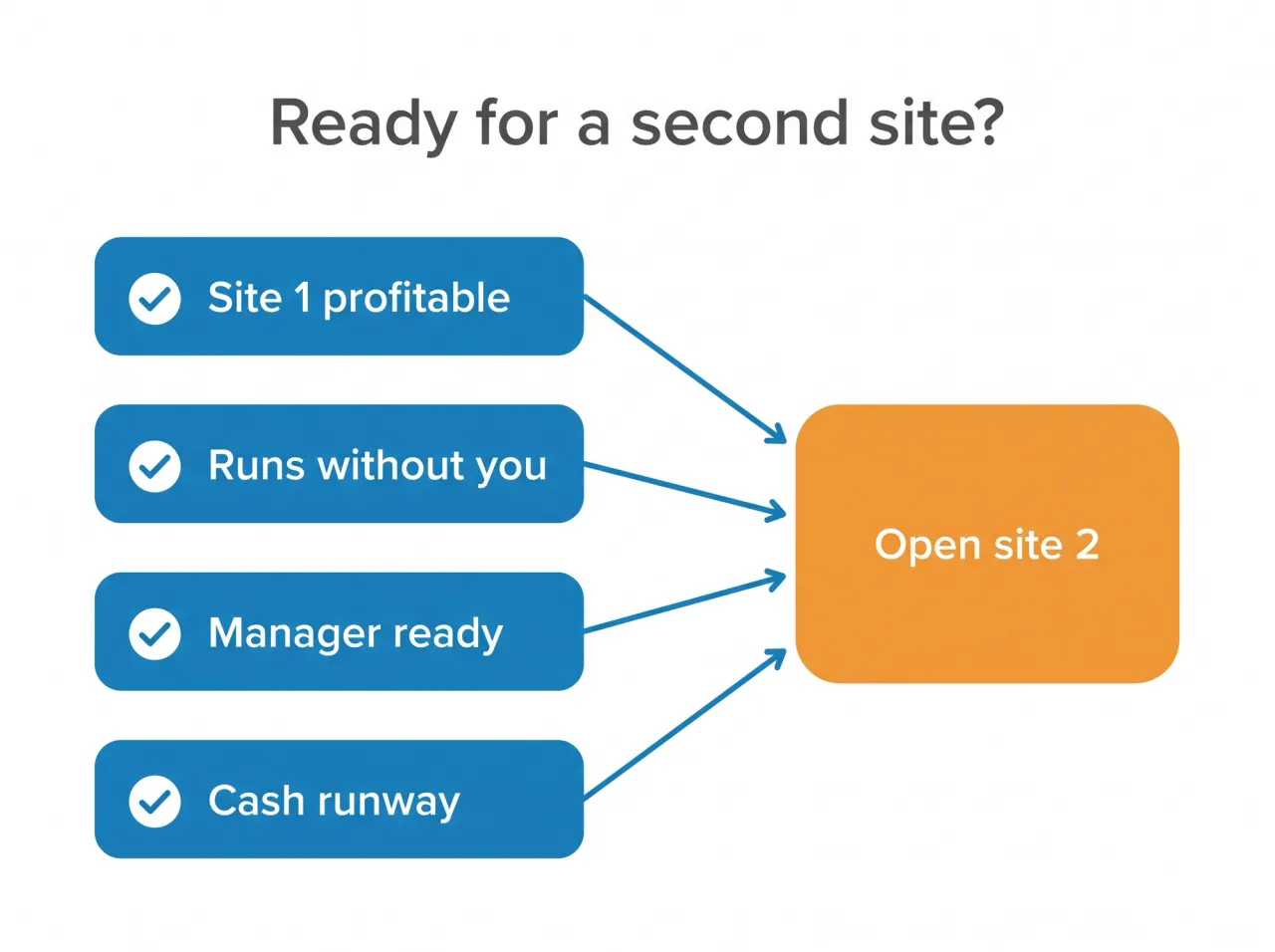
A restaurant is ready for a second location when the first one makes money without you in the room, a manager can run it day to day, the concept works outside its own street, and you have enough cash to carry the new site through a slow start. Miss one of those and the second restaurant usually ends up draining the first.
Most second sites that struggle don't fail because of the food. They fail because the owner splits their time, the original kitchen slips, and nobody can say which site is actually making money. This guide covers how to tell if you're ready, how to pick the site, what to copy from restaurant one and what to rebuild, the systems that keep two sites honest, and what changes when you expand inside the UAE.
When is a restaurant ready for a second location?
Ignore how busy the first site feels on a Friday night. These four checks matter more.
The first site makes money without you
Take yourself out of the rota for two weeks and watch what happens to sales, food cost and complaints. If the numbers hold, the business runs on systems. If they dip, the business runs on you, and you can't be in two kitchens at once.
You have a manager who can run it
Your best people will want to move to the new site. Before they do, someone has to own the first one: rotas, ordering, cash-up and the daily standard. If you keep losing good managers, fix that first; our guide to restaurant staff turnover covers what makes them stay.
The concept travels
Some restaurants work because of one building, one chef or one neighbourhood crowd. Ask honestly whether guests come for the food and the format, or for something you can't copy.
You have cash for a slow start
A new site rarely hits its sales target in the first months. Work out the second site's break-even, the monthly sales it needs to cover rent, staff and food, and make sure you can fund the gap without borrowing from the first site's supplier money. Our guide to restaurant KPIs and break-even shows how to calculate it.
How do you choose the right second site?
Start from where your current guests already come from, not from the cheapest lease. Two questions decide most site choices.
- Close or far? A site nearby is easier to supervise and shares suppliers and staff, but it can pull regulars away from the first restaurant. A site across town reaches new guests and costs you more time on the road.
- Same format or smaller? Many operators open a smaller second site, a takeaway counter or a reduced menu, to test a new area before committing to a full dining room.
Whatever you choose, run the numbers on the actual unit: rent as a share of expected sales, footfall at the hours you trade, parking and delivery access. A great rent on a dead street is not a saving.
What should you copy from the first restaurant, and what should you rebuild?
Copy the things that make the brand consistent. Rebuild the things that depend on the room.
- Copy: recipes and portion specs, core dishes, supplier terms, opening and closing checklists, training material and your service standard.
- Rebuild: the floor plan, the menu size for the new kitchen, staffing levels for the new trading pattern, and prices if rent or the local crowd is different.
The menu is where most owners copy too much. A smaller kitchen or a different crowd usually means fewer dishes, not the same 60 items squeezed into half the space. Treat the first site's menu as the master, copy the core, and cut from there with restaurant menu management that lets you change prices and items per site.
When we built branch creation, we made the copy selective on purpose. You pick which ingredients, dishes and menus come across from the existing branch, instead of getting a blind duplicate. A full clone sounds faster, but the second site rarely sells exactly the same menu: different rent, different crowd, sometimes a smaller kitchen. Copy everything and you spend the first month deleting dishes the new kitchen can't make. We also kept every branch on its own numbers from day one, because by month three the only question that matters is whether site two pays for itself.
What systems do you need to run two restaurants?
With one site you can manage from memory. With two you need the same system in both, so recipes, stock and sales mean the same thing everywhere. Three things matter most:
- One account, separate branches. You should be able to switch between sites without separate logins or separate software, while each branch keeps its own orders, stock and staff.
- Each branch on its own numbers. Sales, top dishes, food cost and profit need to be visible per site, so a strong first restaurant can't hide a weak second one.
- Stock tracked per site. Ingredients bought for one kitchen and used in the other make both sites' food cost wrong. Keep inventory management separate for each branch.
In Quickbuy, adding a branch is part of the same account: you create the new location and choose which ingredients, dishes and menus to copy from an existing one, so the second kitchen starts with your recipes instead of a blank screen. Each branch then has its own dashboards for live sales, top-selling items with their margins, and its own profit and loss report, and you switch between branches to check each one. If you're comparing software for a larger group, our restaurant ERP guide for multi-location operators goes deeper.
Whatever you use, set a weekly routine before opening day: the same handful of numbers for each site, checked on the same day. Restaurant analytics only help if someone actually looks at both sites every week.
Opening a second location in the UAE
Expanding inside the UAE has a few rules that catch owners out. Licences are issued by each emirate's own authority, so a trade licence from Dubai doesn't cover a branch in Abu Dhabi or Sharjah, and food safety approval for the new premises comes from that emirate's authority too. Even inside the same emirate, a new site needs its own branch licence and premises approval. Requirements differ between emirates and between mainland and free zones, so confirm the list with the authority you're applying to.
VAT works differently. Registration belongs to the legal entity, not the branch, so a second site run by the same company usually trades under your existing TRN, while a new company has its own registration obligation. The UAE Federal Tax Authority's VAT guidance is the place to check. If you're also changing your setup, our checklist for opening a restaurant in the UAE covers the operational side of a new site.
Common second-location mistakes
- Moving your best chef and best manager to the new site at the same time, and leaving the first site to whoever is left.
- Opening with the full menu in a smaller kitchen.
- Blending both sites' numbers, so you can't see which one is losing money.
- Funding the second site's slow months from the first site's supplier payments.
- Signing the lease before checking footfall at the hours you actually trade.
Frequently Asked Questions
How do I know if I'm ready to open a second restaurant?
You're ready when the first restaurant stays profitable without you there every day, a manager can run it, the concept doesn't depend on one building or person, and you can fund the new site through a slow start. If any of those is missing, fix it at the first site first.
How much does it cost to open a second restaurant location?
It depends mostly on rent, fit-out and how much you can reuse from the first site. A second location often costs less in systems, recipes and supplier setup because those already exist, but rent, deposits, fit-out, equipment and opening stock are new money. Budget for several months of running costs on top of the build.
Should my second restaurant be close to the first one?
Close makes it easier to supervise and share staff and suppliers, but it can take guests from your first site. Further away reaches new customers but costs more management time. Look at where your current guests come from before you choose.
Can I use the same trade licence for a second branch in the UAE?
Usually not on its own. Each new premises needs its own branch licence and approvals, and a branch in a different emirate is licensed by that emirate's authority. Check the exact requirements with the licensing authority you're applying to.
Do I need a separate VAT registration for a second branch?
Not if the branch belongs to the same legal entity. VAT registration sits with the company, so branches usually trade under the existing TRN. A new company running the second site would have its own registration obligation.
How long does it take a second location to become profitable?
There's no fixed timeline. Work out the site's break-even before you open and track it every month against actual sales. Keeping each branch's numbers separate is what lets you see when the new site starts paying for itself.
Grow without losing the first restaurant
A second location should build on what already works without stretching it thin. Get the first site running without you, copy the recipes and standards, rebuild what depends on the room, and keep every site on its own numbers from day one.
Quickbuy lets you add a branch to the same account, copy the ingredients, dishes and menus you choose, and see each site's sales and profit on its own. Your plan sets how many branches you can add, so compare Quickbuy plans and pricing or book a demo and walk through setting up your second site.