On this page
- What does restaurant reservation software do?
- Do you actually need a booking system?
- How much does reservation software cost?
- The number that decides it: no-shows
- Which features actually matter?
- Where reservations meet repeat visits
- Where Quickbuy fits, and where it does not
- Frequently Asked Questions
- Buy for the covers you actually take
Restaurant reservation software costs roughly 0 to 300 USD per location per month, and the honest first question is whether you need it at all. If most of your covers walk in off the street, a live view of your floor does more for you than a booking engine. If a meaningful share of your revenue is booked ahead, the software pays for itself on no-shows alone.
This guide covers what the category actually does, how to tell which side of that line you are on, what the pricing models cost you in practice, and the features that matter once bookings are a real part of your business. It also says plainly where Quickbuy does and does not fit, because we do not sell a booking engine.
What does restaurant reservation software do?
Four jobs, and the pricing model usually tells you which one the vendor is really selling.
- Takes the booking. A page on your site, your social profiles and often a marketplace listing, with real time availability rather than a form that emails you.
- Manages the book. Table assignment, turn times, pacing so the kitchen does not get eight covers at once, and a waitlist when you are full.
- Reduces no-shows. Confirmations, reminders, and card holds or deposits, which is where most of the measurable money is.
- Builds a guest record. Visit history, preferences and spend, which is the part that connects to marketing rather than to operations.
That last job is why reservation platforms and CRM tools keep colliding. A booking system that remembers guests is doing restaurant CRM work under another name, and the overlap is worth understanding before you buy both.
Do you actually need a booking system?
The deciding factor is not how many covers you do. It is how many of them are planned in advance.
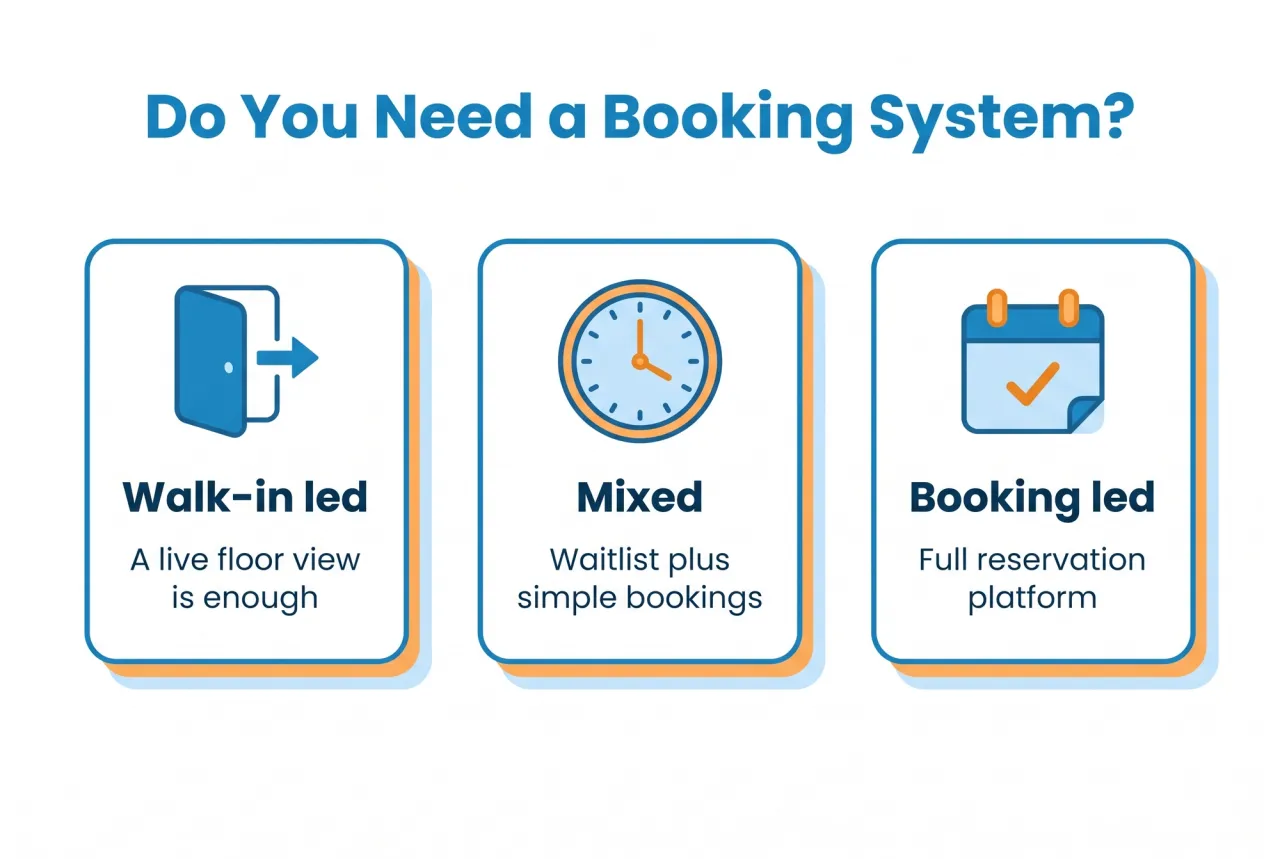
Walk-in led
Cafes, counter service, most casual dining. Bookings are occasional and a notebook handles them. What you actually need is to see the room: which tables are free, which are running long, and what is outstanding on each. That is table management, and it is a different product from a booking engine.
Mixed
Bookings matter on weekends and for larger parties, walk-ins carry the weekday. A waitlist plus simple online booking usually covers it, and this is the tier where restaurants most often overbuy. Start with the cheapest option that handles Friday.
Booking led
Fine dining, tasting menus, anywhere covers are planned days ahead and a no-show costs you a table you cannot resell. Here a full platform earns its price, and deposits or card holds stop being optional.
How much does reservation software cost?
Three pricing shapes, and they behave very differently at volume:
- Free or freemium tiers: 0 USD, usually capped on covers or missing the deposit features that make the category worth buying.
- Flat subscription: roughly 50 to 300 USD per location per month, predictable and the sane default once bookings are a real channel.
- Per cover fees: a small charge on each booked seat, which looks cheap until a good month arrives. Model it at your busiest week, not your average one.
Marketplace-linked platforms sometimes reduce the subscription in exchange for listing you alongside competitors and charging for covers they send. That can be worth it for discovery, but it is the same trade you make with delivery aggregators, so price it the same way.
The number that decides it: no-shows
Everything else in this category is convenience. No-shows are the line item you can actually measure, and they are why booking-led restaurants buy software rather than keeping a diary.
Work out what a no-show actually costs before you shop. A twenty cover Saturday sitting with an average check of 200 AED is 4,000 AED of booked revenue. A ten percent no-show rate on that is 400 AED gone in one service, and it is the same table you turned away a walk-in for. Card holds usually cut that rate sharply. The software is worth buying at the point where the no-shows it prevents cost more than the subscription, and not one month before.
Measure your own rate for a month before buying anything. Most operators guess high or low by a wide margin, and the real figure decides both whether you need the software and which tier.
Which features actually matter?
- Deposits and card holds, the feature that produces the saving. Check what happens on a partial cancellation and whether the flow embarrasses your guests.
- Pacing and turn times, so the book does not seat the whole room at eight and drown the kitchen.
- A waitlist that texts, which converts the queue you already have rather than chasing new demand.
- A guest record that survives, exportable and yours, not locked to a marketplace listing.
- POS awareness, at minimum knowing whether a booked table is still occupied. Our POS comparison notes which platforms expose that cleanly.
Treat marketplace reach as a separate decision from software. The listing brings covers you did not have; the software manages covers you did. Buying them as one thing makes it impossible to tell which is working.
Where reservations meet repeat visits
The strongest argument for this category is not the booking, it is what you know afterwards. A guest record with visit history and spend lets you tell a regular from a first timer, which is the input every retention programme needs.
That said, the sequence matters. A loyalty programme built on a thin guest list underperforms, and lifting what each visit is worth is usually faster than lifting how often people come back. Our guide to average order value covers that side, and it needs no booking engine at all.
Where Quickbuy fits, and where it does not
To be direct: Quickbuy has no booking engine, no online reservation page and no digital waitlist. If you take bookings you will keep doing that however you do it now, and a dedicated platform is the right purchase.
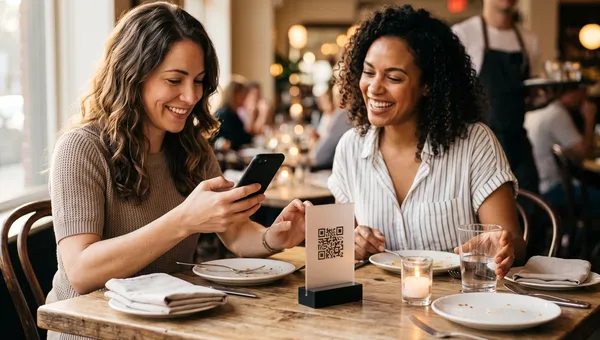
What Quickbuy runs is the live side of the room: tables by floor with capacity and status, a Reserved status you can set by hand, open orders and bills per table, and QR order and pay at the table so guests do not wait to catch someone's eye. For walk-in led venues that is usually the whole job. For booking led ones it sits alongside your reservation platform rather than replacing it.
Frequently Asked Questions
What is restaurant reservation software?
It is the system that takes bookings, manages the book across your tables and service times, reduces no-shows with confirmations and deposits, and keeps a guest record. Its value scales with how much of your revenue is planned in advance rather than walked in.
How much does a reservation system cost?
Free tiers exist but usually lack deposits, flat subscriptions run roughly 50 to 300 USD per location per month, and per cover pricing charges on each booked seat. Model per cover pricing against your busiest week, because that is where it stops being cheap.
Do I need reservation software if most guests walk in?
Probably not. Walk-in led venues get more from a live view of table status and faster ordering than from a booking engine. Revisit the decision when bookings become a channel you would notice losing.
How do I reduce no-shows?
Card holds or deposits do the heavy lifting, with confirmations and a reminder close to the sitting doing the rest. Measure your current rate first, because it determines whether the software pays for itself and how firm your deposit policy needs to be.
Should reservations and CRM be the same platform?
They overlap heavily, since a booking system that stores visit history is already doing CRM work. Buying both often means paying twice for the same guest record, so check what your reservation platform already holds before adding a separate tool.
Does Quickbuy take reservations?
No. There is no booking engine, no online reservation page and no digital waitlist today. Quickbuy covers the live floor, table status, orders and payment, and works alongside whatever booking system you use.
Buy for the covers you actually take
Measure your no-show rate, work out what a lost sitting is worth, and count how many covers are genuinely planned ahead. Those three numbers tell you whether you need a full platform, a waitlist, or nothing beyond a clear view of your floor.
If the answer is the floor rather than the book, that is what Quickbuy does: live table status, orders and payment in one system, with no booking engine to pay for. See plans and pricing.