On this page
- What is the difference between a minimum spend and a cover charge?
- Should your venue use a minimum spend or a cover charge?
- How do you set the right minimum spend?
- How do you run a minimum spend at the door?
- What about minimum spends for tables and groups?
- Common minimum spend mistakes
- Frequently Asked Questions
- Make the door part of the night
A minimum spend asks guests to spend a set amount inside your venue, while a cover charge is a fee just to get through the door. For most lounges, rooftop bars and beach clubs, a minimum spend that guests load upfront and spend on food and drinks is easier to sell at the door, because the money comes back to them as something to enjoy.
Both are common in the UAE, and both can go badly when the rules aren't clear. This guide explains the difference, when each one makes sense, how to set the amount, how to run a minimum spend at the door without slowing the queue, and the mistakes that turn a good policy into a bad review.
What is the difference between a minimum spend and a cover charge?
They look similar at the door and feel very different to the guest:
- Cover charge: a fixed fee to enter. It pays for the music, the event or the space, and everything the guest orders inside is on top.
- Minimum spend: an amount the guest commits to spending inside. Paid upfront, it becomes credit for food and drinks, so the guest gets the value back over the night.
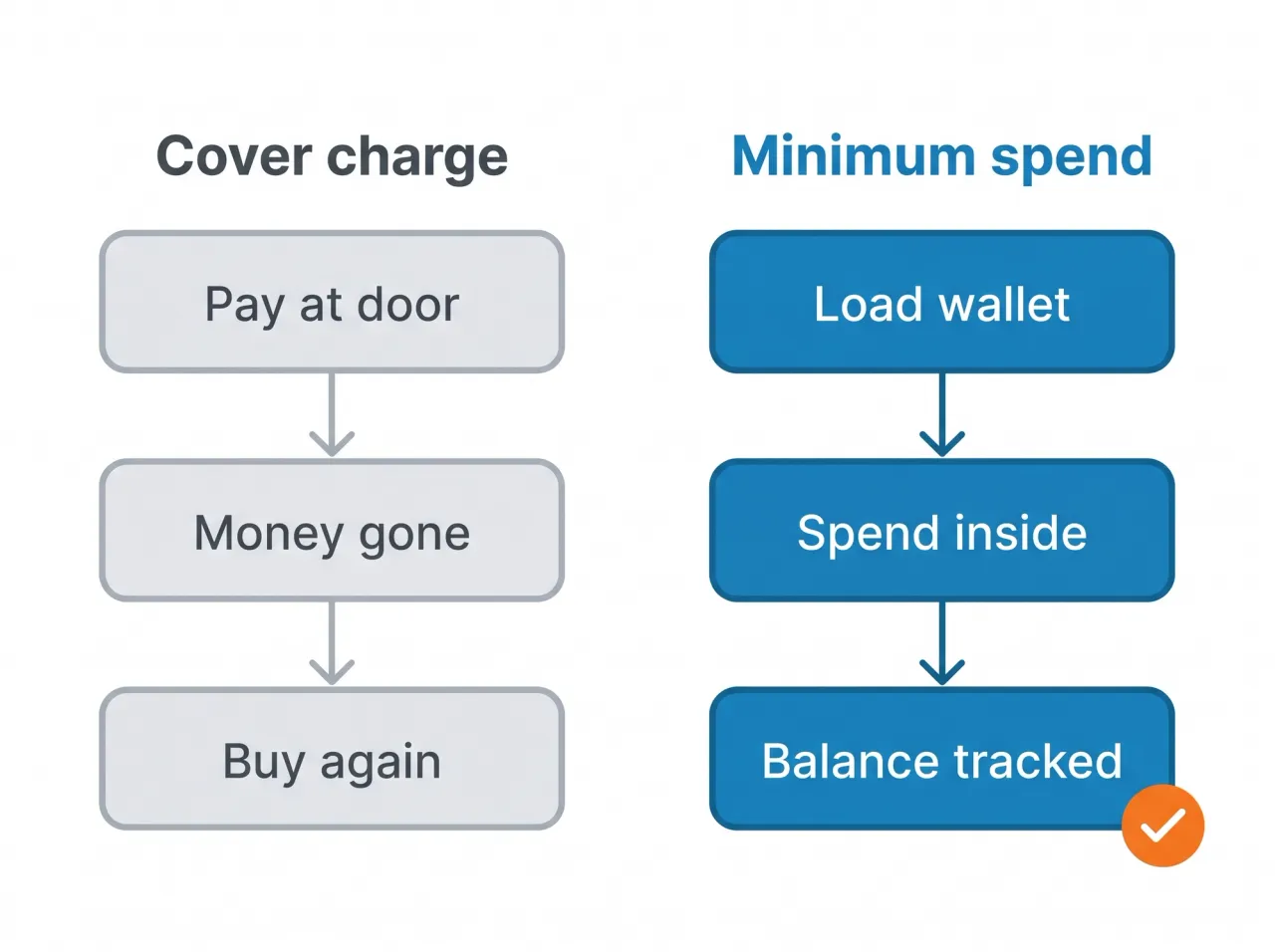
The difference shows up in how guests talk about you afterwards. A cover charge is remembered as a cost. A minimum spend is remembered as the price of the night, because the guest ate and drank it.
Should your venue use a minimum spend or a cover charge?
When a cover charge makes sense
A cover charge fits nights where the entertainment is the product: a well-known DJ, live music, a special event, or a busy holiday night where demand is far higher than capacity. Guests expect to pay for the act, and the fee helps cover it.
When a minimum spend works better
A minimum spend fits venues where food and drink are the product: lounges, rooftop bars, beach clubs and restaurants with a late-night crowd. It protects your seats from guests who stay for hours on one drink, and it lifts average spend without feeling like a penalty, which is the same logic behind raising your restaurant average order value without discounting.
How do you set the right minimum spend?
Start from what guests already spend, not from what you wish they spent.
- Look at your average spend per guest on the nights you want to protect. Set the minimum at or slightly below it, so most guests reach it without trying.
- Decide how long it lasts. A beach club that admits for the day needs a different rule from a lounge that turns tables in the evening.
- Use different amounts for different nights rather than one number all week.
- Decide what happens to an unspent balance, and say it clearly before the guest pays.
- Review it monthly against what guests actually spent, and adjust.
Treat the number like any other price: track it with the rest of your restaurant KPIs and change it when the data says so.
How do you run a minimum spend at the door?
The policy only works if the door is quick and the balance is easy to spend. In practice that means four things: check the guest, take the payment, attach it to the guest so it can be spent inside, and let them see what's left.
In Quickbuy, a venue can set entry to free or to a minimum spend, choose the amount, and make it valid for each visit or for a time window in hours. Guests load the amount to their wallet, either at the door, where staff scan the guest's wallet QR and collect the fee, or before they arrive in the guest app they use to scan and order. Inside, they spend it by paying with their wallet when they order, and by default any balance left stays on their wallet for the next visit. The reception screen shows staff each guest's balance and lets them top up cash at the door, and the admission report shows passes issued and fees collected.
When we built entry access, we made the fee spendable credit instead of a gate fee. A guest who pays at the door and gets the same amount to spend inside feels like they've been let in, not charged. A cover charge feels like a toll. We also made validity a choice, each visit or a window of hours, because a beach club that admits for the day and a lounge that turns tables in the evening need different rules.
Reporting matters as much as the door. If you can't see how much was loaded, how much was spent and what's left, you can't tell whether the minimum is set right. Connect it to the rest of your restaurant analytics so the minimum spend sits next to sales, not in a separate notebook.
What about minimum spends for tables and groups?
Many lounges in Dubai and Abu Dhabi attach a minimum spend to a table rather than to each guest, especially for groups and big nights. If you do, agree the amount and what it covers before the group arrives, and keep the table plan visible so hosts know which tables are committed. Restaurant table management that shows which tables are occupied helps the host seat walk-ins around them.
At the end of the night, a big table usually wants to split the bill. Letting guests split it from their phones keeps the last ten minutes calm, as our guide to pay at table explains.
Common minimum spend mistakes
- Setting the amount far above what guests normally spend, so it feels like a trap.
- Not saying upfront what happens to unspent balance.
- Taking the payment at the door with no way to track what's left inside.
- Using the same number on a quiet Tuesday and a sold-out Friday.
- Hiding the rule until the guest reaches the front of the queue.
Frequently Asked Questions
What is a minimum spend at a bar or restaurant?
It's an amount a guest agrees to spend on food and drinks inside the venue. Some venues take it upfront at the door and give it back as credit to spend; others add any shortfall to the bill at the end of the night.
Is a minimum spend better than a cover charge?
For venues that sell food and drink, usually yes, because the guest gets the value back and it lifts average spend. A cover charge suits nights where the entertainment itself is what guests pay for, like a headline DJ or a live event.
Can a minimum spend be used on food and drinks?
Yes, that's the point of it. When the minimum is loaded upfront, guests spend it on whatever they order inside, and the remaining balance goes down as they go.
What happens if guests don't spend the full minimum?
It depends on your policy, which is why you should state it before the guest pays. Some venues keep the remaining balance for the guest's next visit, others charge the difference at the end of the night. Either works if guests know in advance.
How much should a minimum spend be?
Set it at or slightly below what guests already spend on the nights you want to protect, so most reach it without effort. Review it monthly against actual spend and use different amounts for quiet and busy nights.
Do minimum spends work for restaurants as well as clubs?
Yes, especially for restaurants with a late-night or lounge crowd, rooftop terraces and busy weekend nights. For a standard dinner service, a set menu or a deposit for large groups is often the simpler choice.
Make the door part of the night
A minimum spend works when it feels like credit, not a fee. Set the amount from real spend, decide how long it lasts, say what happens to the balance, and make it as easy to spend inside as it was to pay at the door. Guests who enjoy the night come back, which is where a restaurant loyalty program earns its keep.
Quickbuy brings entry, wallets, ordering and sales into one system, so a minimum spend loaded at the door is spent at the table and shows up in your reports. Compare Quickbuy plans and pricing, or book a demo and ask to see entry access.