On this page
- What does delivery management software do?
- Do you actually need it?
- How much does delivery management software cost?
- What does a delivery order actually cost you?
- Which features actually matter?
- The cheaper fix most restaurants skip
- How do you choose?
- Frequently Asked Questions
- Count the tablets, then count the seconds
Delivery management software sits between the delivery apps and your kitchen: it pulls orders from every marketplace you are on into one screen, keeps menus and prices in sync across them, and reports what each delivery order actually earned. Expect roughly 50 to 200 USD per location per month, and expect the honest answer to "do I need it" to be no until you are running two or three apps at once.
This guide covers what the category does, when the tablet pile justifies buying, what it costs, and how to work out the real margin on a delivery order. If you are still deciding which marketplaces to join, that is a different question and our guide to on demand delivery platforms answers it first.
What does delivery management software do?
Four jobs, and vendors bundle them differently:
- Order aggregation. Tickets from each marketplace land in one queue instead of on one tablet each, usually flowing into your POS or kitchen screen.
- Menu and price sync. You change a price once and it propagates to every app, rather than editing the same item in four portals and forgetting one.
- Stock and availability push. When something runs out you mark it once, and it goes dark everywhere before the next order arrives for it.
- Consolidated reporting. Sales, commission and promotions across all channels in one report, which is the only way to see true margin per channel.
What it does not do is reduce commission. Aggregation makes running several marketplaces survivable; it does not change the cut they take, which is the subject of our breakdown of Talabat commission.
Do you actually need it?
The threshold is not revenue, it is the number of order sources your staff touch during a rush.
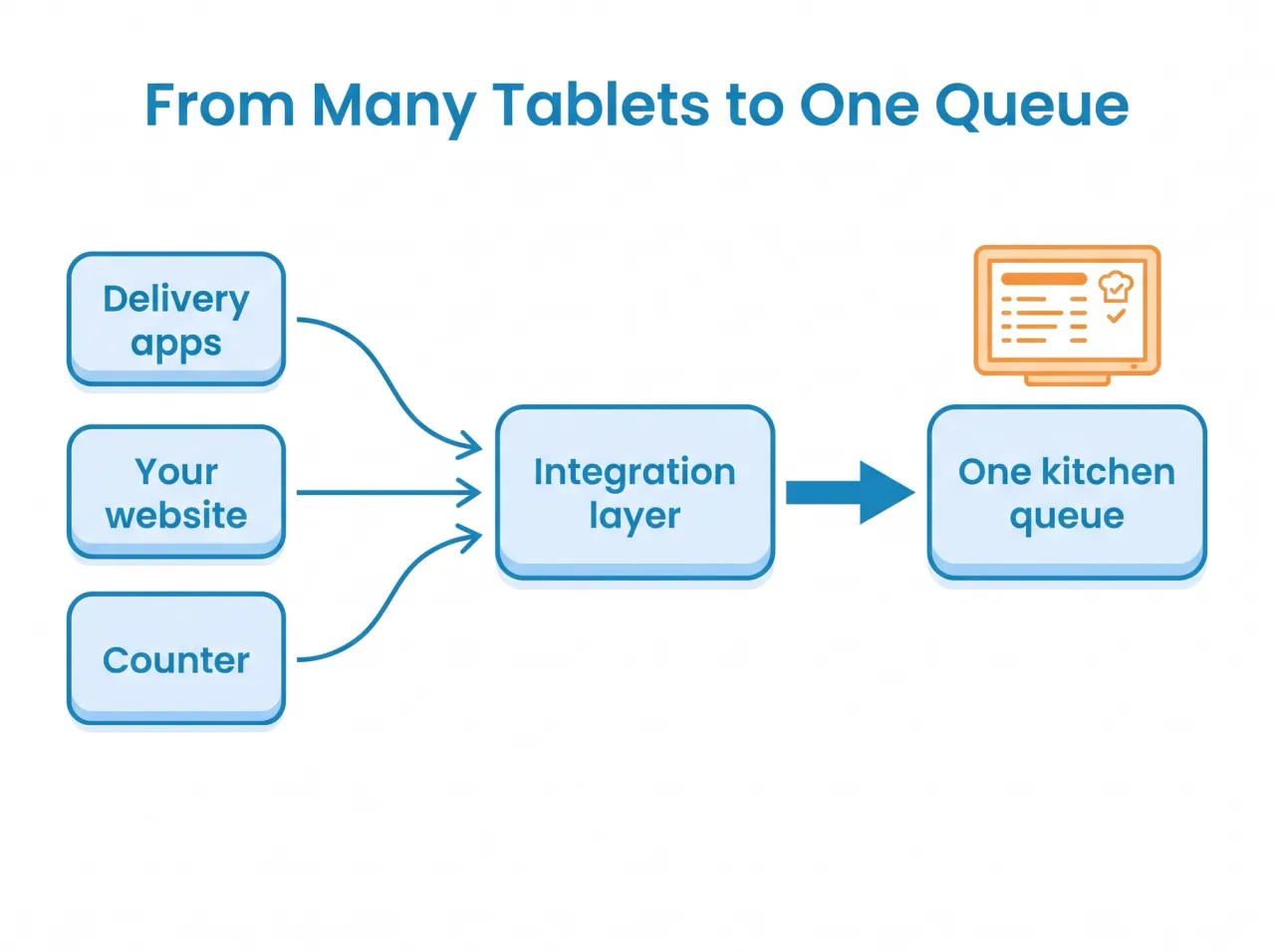
- One marketplace: no. One tablet is annoying, not expensive. Spend the money elsewhere.
- Two marketplaces: probably not yet, unless menu changes are frequent enough that keeping both in sync is already eating manager time.
- Three or more: usually yes. This is where re-keying errors, missed sold-out items and wrong prices start costing more than the subscription.
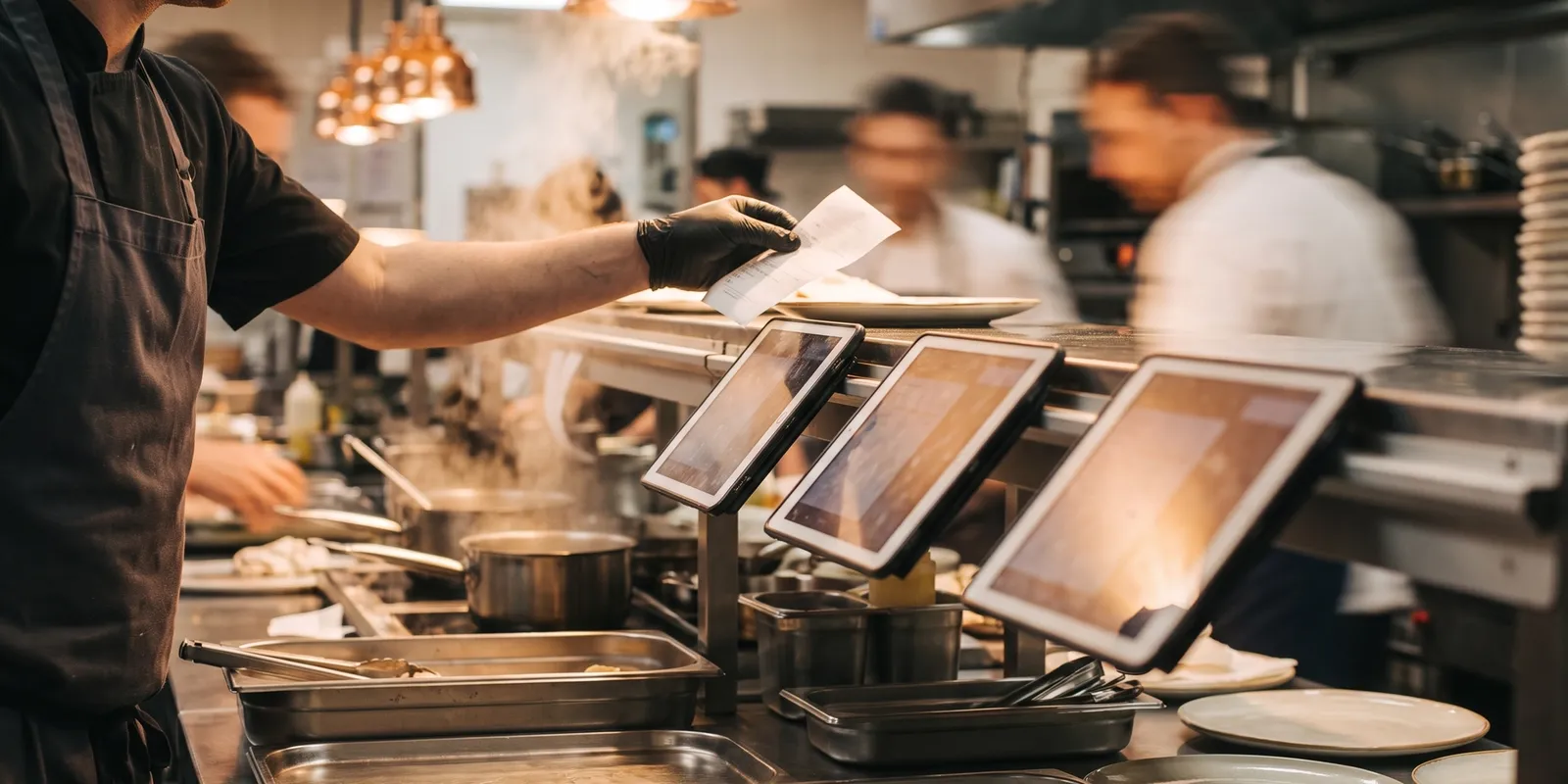
The number that convinced me was not commission, it was seconds. A kitchen doing 80 delivery orders a night, spending 45 seconds per ticket reading one tablet and re-typing it into the till, burns exactly one hour of someone's shift every single night. That is a staff hour you are paying for twice, and nobody has it on a report anywhere.
How much does delivery management software cost?
Published pricing in this category is patchy, so treat these as bands and get your own quote:
- Integration platforms: roughly 50 to 200 USD per location per month, sometimes with a small per order fee on top.
- Setup and menu mapping: 0 to about 500 USD once. Mapping your items to each marketplace catalogue is the real work.
- Bundled in a POS: sometimes free, if your till already offers native marketplace connections. Ask before buying a separate layer.
Price it against the hour you just costed, not against the commission. If aggregation saves an hour of labour a night and costs less than that hour, it pays for itself on staffing alone.
What does a delivery order actually cost you?
This is the number most operators never build, and it is the one that decides whether delivery is worth running at all. On a 100 order through a marketplace:
- Commission of about 25, depending on your agreement.
- Packaging of about 4, which nobody puts in the model.
- Food cost of about 30 at a healthy percentage.
- Leaving roughly 41 before labour and overhead.
The same 100 through your own channel carries card processing of about 2 instead of commission, so the same packaging and food cost leave you about 64. That gap, not the software, is the real delivery decision, and it is why our commission free ordering guide spends so long on it.
Which features actually matter?
- Native connections to the marketplaces you actually use, not a generic list. Coverage in the Gulf differs sharply from coverage in the US or Europe.
- True two way sync, so marking an item sold out in your POS reaches the apps, not only the reverse.
- Routing into your kitchen screen with station logic, so delivery tickets queue properly against dine in ones. A kitchen display system is what makes the consolidated queue useful rather than just longer.
- Per channel reporting that includes promotions, because a marketplace discount you funded is invisible in gross sales.
- Graceful failure. When the connection drops, tickets must not vanish. Ask exactly what happens and how you find out.
The cheaper fix most restaurants skip
Aggregation software treats the symptom. The cause is how many marketplaces you depend on, and the cheapest way to reduce tablets is to move a share of that volume onto a channel you own, where there is no commission and the order arrives in your system natively.
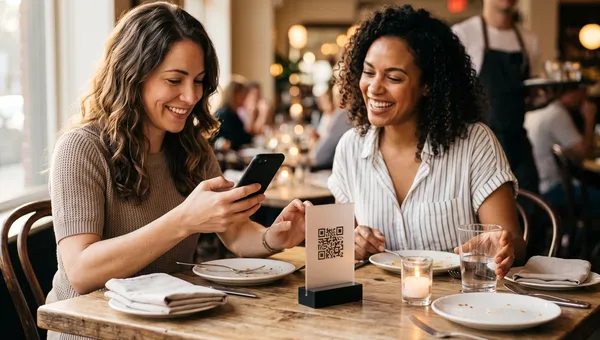
To be straight about where Quickbuy sits: we do not ingest Talabat, Deliveroo or Careem orders today, so aggregator tickets stay on their own tablets. Aggregator integration is on the roadmap. What Quickbuy handles now is the channel you own, dine in, QR and direct takeaway landing on one board with order management and kitchen routing built in. Most operators we work with run those on Quickbuy and keep the marketplaces purely for reach.
How do you choose?
- List the marketplaces you actually run, then ask each vendor to confirm native support for those exact ones in your country.
- Count your tablets and your re-keying seconds. That is your saving. Compare it to the subscription before anything else.
- Check the POS side of the integration, including whether tickets carry modifiers and notes intact. Losing a modifier is worse than losing a tablet.
- Ask what happens during an outage, and whether you can still accept orders manually without breaking the reporting.
- Run it for one week on one location before rolling it out, ideally through a weekend.
Frequently Asked Questions
What is delivery management software for restaurants?
It is a layer that connects your delivery marketplaces to your POS and kitchen, pulling every order into one queue, syncing menus and prices across apps, and reporting margin per channel. It manages the orders you receive; it does not negotiate or reduce the commission you pay.
How do I get all delivery apps on one screen?
Either through an integration platform that connects to each marketplace, or through a POS that offers those connections natively. Confirm coverage for the specific apps you use in your specific country, because marketplace support varies far more by region than vendors imply.
How much does delivery management software cost?
Typically 50 to 200 USD per location per month, occasionally with a per order fee, plus up to about 500 USD once for setup and menu mapping. Some POS platforms include marketplace connections at no extra cost, so check what you already own first.
How do I calculate profit on a delivery order?
Start from the order value, then subtract commission, packaging, any promotion you funded, and food cost. On a 100 order that often leaves around 41 before labour. Build it once per channel and the decision about which marketplaces to keep makes itself.
Does it reduce delivery commission?
No. Aggregation software makes multiple marketplaces operationally manageable, but commission is set by your agreement with each platform. The only reliable way to lower the blended rate is to shift volume to a channel you own.
Do I still need a tablet for each app?
With a working integration, no, though many operators keep one tablet per marketplace as a fallback during outages. Ask your vendor what their recommended contingency is, and be sceptical of any answer that assumes the connection never drops.
Count the tablets, then count the seconds
Delivery management software is worth buying at three marketplaces and hard to justify at one. Before you shop, cost the labour you are spending on re-keying, and build the per order margin for each channel you run. Those two numbers answer the question faster than any demo.
If part of the answer is moving volume onto a channel you own, that is what Quickbuy does today: commission free direct and QR ordering, on one board, with the kitchen screen included. See plans and pricing.