On this page
- What actually has to be working on day one?
- Cost your menu before anything else
- Licence, VAT and the paperwork you cannot rush
- Choose your systems in one decision, not five
- How long does opening a restaurant in the UAE actually take?
- Train the team before the soft launch, not during it
- What a soft launch is actually for
- Frequently Asked Questions
- Get the operations right and the opening is boring
Opening a restaurant in the UAE takes roughly three to six months from signed lease to first cover, and the part that most often slips is not the fit out or the licence. It is the operational setup: a costed menu, a till that prints a compliant invoice, and a team that can run a full service without asking where the button is.
This is an operations checklist, not legal advice. Licensing routes differ by emirate and by whether you sit on the mainland or in a free zone, so treat the paperwork section as a map rather than a manual and confirm every requirement with your own authority. What follows is the part we can speak to: what has to be working before you let the first guest through the door.
What actually has to be working on day one?
Strip the opening plan back and only five things have to be true before you serve a paying guest.
- Your menu is costed, not just written, so you know the margin on every dish you are about to sell at volume.
- Your till issues a compliant tax invoice in the right languages, from the first ticket.
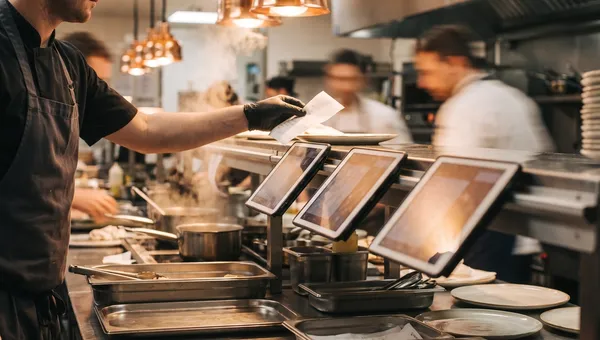
- Orders reach the kitchen the same way every time, whether they come from a table, a counter, or a phone.
- Stock is being counted from day one, because the habit is nearly impossible to start retroactively.
- Every person on shift has used the system before, on the real menu, not on a demo.
Everything else, the loyalty scheme, the second location plan, the delivery channels, can wait until you have a functioning service. Trying to launch all of it at once is the single most reliable way to have a bad first month.
Cost your menu before anything else
The menu is the only decision that constrains every other one. It sets your equipment list, your storage, your prep labour and your supplier list, and it is far cheaper to change on a spreadsheet than after the kitchen is built.
Cost every dish to the ingredient before you print anything. You are looking for two things: the food cost percentage on each item, and the handful of dishes that carry the room. Our guide to food cost percentage covers the calculation and the target ranges for different service styles. Do this early enough and the menu can still change; do it after launch and you are repricing in public.
Licence, VAT and the paperwork you cannot rush
This is where the timeline usually goes. The general shape is a trade licence from the relevant authority, food safety approval for the premises, municipality inspection, and staff permits, each with its own queue. Requirements and sequencing differ between emirates and between mainland and free zone setups, so the only reliable source is the authority you are actually applying to.
Two things are worth knowing early because they shape your systems, not just your filing. Your business will have a VAT registration obligation once turnover passes the mandatory threshold, and the current rules and figures live with the UAE Federal Tax Authority. And whatever the threshold decision, your invoices need to be compliant from the first sale, which is a POS configuration question rather than an accounting one. Our UAE restaurant VAT guide covers what a compliant tax invoice has to show.
Choose your systems in one decision, not five
New operators routinely buy a till, then an ordering system, then a kitchen screen, then inventory software, and discover in month three that none of them talk to each other. One piece of restaurant POS software that already includes the other three is usually cheaper than four subscriptions and always cheaper to train on. Buying the stack as one decision is cheaper and much faster to train on.
Ask what the system does on the worst day rather than the best one: what happens when the internet drops mid service, whether stock depletes as you sell, whether a tax invoice prints correctly without anyone thinking about it. Our POS comparison runs through the options and the trade-offs; if you are opening in the Gulf specifically, restaurant tools built for the UAE covers what changes locally.
How long does opening a restaurant in the UAE actually take?
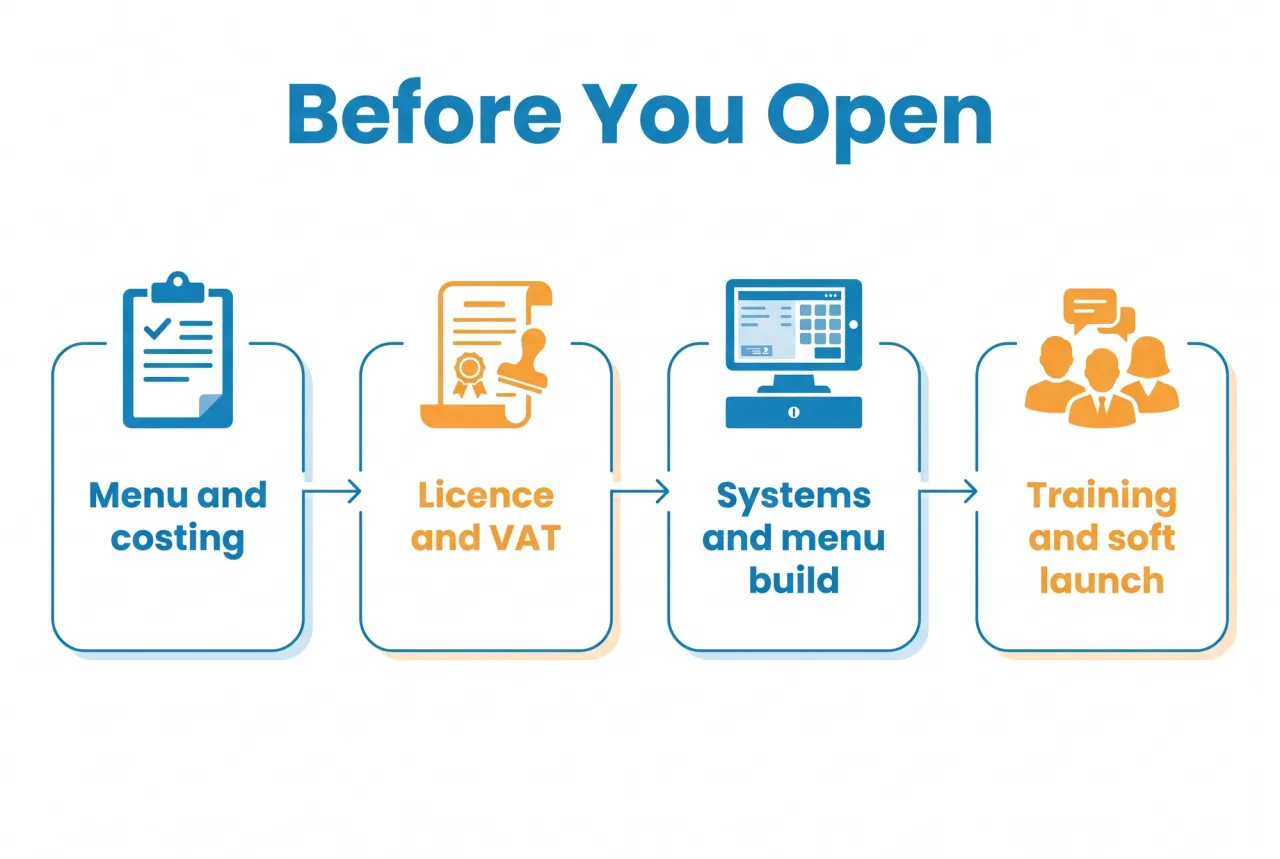
Assume three to six months end to end, and plan the operational work backwards from your target opening date rather than forwards from today:
- Menu design and costing starts first and runs longest, because everything else depends on it.
- Licensing and premises approvals run in parallel and are the least controllable, so start them the day the lease is signed.
- System selection should be settled well before fit out finishes, not after.
- Menu build and configuration takes a couple of days for a normal menu with modifiers, longer if your recipes are not written down.
- Staff training needs a real block of time, not an afternoon squeezed in the week you open.
- Soft launch last, with real guests and real tickets, far enough before opening that you can fix what it exposes.
Train the team before the soft launch, not during it
This is the step that gets compressed when the calendar slips, and it is the most expensive one to skip. A system nobody can use is indistinguishable from a system that does not work.
The menu build is never the risk. A sixty item menu with modifiers takes about two days to configure and about two hours per person to teach, and it is the second number that teams cut. What that buys you is a first Friday where the manager is explaining the till instead of running the room. Budget the training time per person, not one session for everybody, and let the quietest member of the team drive during it.
Build your opening rota around that too: the first fortnight needs more cover than the spreadsheet suggests, because everything takes longer while people are learning. Our staff scheduling guide covers how to structure those early rotas.
What a soft launch is actually for
A soft launch is not a marketing event. It is a rehearsal designed to break things while the stakes are low, and it works best when you deliberately stress the parts you are least sure about.
- Run a full ticket volume for a short window rather than a trickle across a whole evening.
- Test the failure you are most afraid of, usually the internet, in the middle of service rather than at the end.
- Check the numbers afterwards, not just the vibe: did stock deplete correctly, did every invoice print properly, where did tickets queue.
- Fix in writing. Anything you discover and do not document will be rediscovered in week two.
Frequently Asked Questions
How long does it take to open a restaurant in the UAE?
Plan on three to six months from signed lease to opening, with licensing and premises approvals as the least predictable part. The operational work, menu costing, system setup and training, fits inside that window comfortably if you start it early and painfully if you leave it to the final weeks.
What licences does a restaurant need in the UAE?
Broadly a trade licence, food safety and premises approval, and staff permits, but the specific list and sequence depend on the emirate and on whether you are mainland or free zone. Confirm the requirements with the licensing authority you are applying to rather than relying on a general guide, including this one.
Do I need to register for VAT before opening?
VAT registration is tied to turnover thresholds rather than to opening day, so the answer depends on your projected revenue. Check the current rules and figures with the Federal Tax Authority. Either way, configure your POS to issue compliant tax invoices from the first sale, because retrofitting that later is far more painful.
What should I set up first?
The costed menu, because it constrains everything else: equipment, storage, prep labour, suppliers and pricing. Systems come next, chosen as one decision rather than four, then menu configuration, then training with the soft launch last.
How much does the technology cost to set up?
For a single site, budget a monthly subscription plus whatever hardware you cannot reuse, and check what is bundled before buying anything separately. The larger and less visible cost is the hours spent building your menu and recipes, which is measured in days of someone's time rather than in licence fees.
Can I open with a spreadsheet and upgrade later?
You can, and plenty do, but the switch is far harder once you are trading because you are migrating live data and retraining a working team. If you know you will need the system within a year, opening on it is cheaper than moving to it.
Get the operations right and the opening is boring
The best openings are uneventful, and that is a compliment. It means the menu was costed, the invoices were right from the first ticket, and the team had used the system before a paying guest walked in. Work backwards from your opening date and put the training block in the calendar before anything else can eat it.
Quickbuy runs the till, QR ordering, the kitchen screen and stock as one subscription, which is one system for your team to learn instead of four. See plans and pricing, or book a walkthrough on your own draft menu before you commit to anything.