The best online ordering system for restaurants in 2026 is the one that charges you a flat fee instead of a slice of every sale. Marketplace apps take roughly 15 to 30 percent per order; direct, commission-free platforms replace that with a fixed monthly subscription plus normal card processing of about 2 to 3 percent. On every 100 you sell, that is the difference between keeping about 73 and keeping about 97.
That gap is the whole argument, but it is not the whole decision. This guide covers what these systems actually do, which platform types carry the lowest fees, what they cost, how the math works for a small restaurant or a QSR, and what changes if you operate in the UAE. If you want the head to head on marketplaces specifically, our breakdown of direct ordering versus third party delivery apps goes deeper on that trade.
What is a restaurant online ordering system?
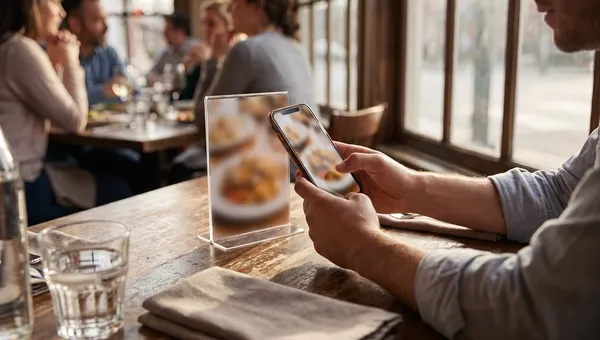
A restaurant online ordering system is the software that lets guests place pickup, delivery, or dine in orders directly through your own website, app, or QR menu, without phoning you or going through a third party marketplace. Orders land straight in your kitchen or POS, payment is captured automatically, and you keep control of pricing, branding, and the customer list.
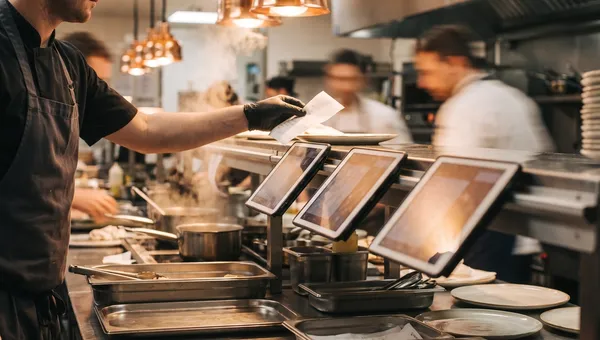
Modern systems go well past an "order now" button. They handle menu management, modifiers and upsells, live order tracking, several fulfilment types, payments, and reporting from one dashboard. The ones worth buying integrate tightly with your point of sale and kitchen workflow, so nobody re-keys an order by hand during a rush.
Which online ordering platform has the lowest fees?
Fees fall into three shapes, and the cheapest one depends entirely on your volume.
- Marketplace commission: roughly 15 to 30 percent of every order. Cheapest at zero volume because you pay nothing up front, and by far the most expensive once orders are steady. Our breakdown of Talabat commission and the margin playbook works through the Gulf numbers in detail.
- Hybrid per order fee: a small fixed amount per ticket plus payment processing. Predictable, and reasonable for restaurants with low but real order counts.
- Flat subscription, commission free: one monthly price, no cut of sales. The cheapest option per order once you pass roughly a few dozen tickets a week, because the cost stops scaling with revenue.
There is also a genuinely free tier of the market: some platforms let you publish a basic ordering page at no cost and make their money on payment processing alone. Those are fine for testing demand, and they usually stop being fine the moment you need POS integration, multiple locations, or your own domain.
The honest rule: below about twenty orders a week, commission is cheaper. Above it, flat pricing wins and the gap widens every month.
How much does an online ordering system cost in 2026?
Price the whole stack, not the headline subscription:
- Software: 0 to about 200 USD per location per month. Free tiers exist; most independents on a serious plan land between 50 and 120.
- Payment processing: about 2 to 3 percent per transaction, and this is unavoidable on any platform, including the commission free ones.
- Setup and menu migration: 0 to about 500 USD once, often waived. Ask before you sign.
- Add ons: 20 to 50 USD each per month for loyalty, multi location control, or advanced reporting on platforms that unbundle them.

Set that against what a marketplace charges on the same revenue. A restaurant pushing 40,000 through delivery apps in a month at 25 percent hands over 10,000 in commission. The same 40,000 through a direct channel costs a few hundred in subscription plus about 1,000 in card fees. That is the entire case for owning the channel, and it is why the break even arrives so quickly.
What is the best online ordering system for a small restaurant or a QSR?
The answer splits by service model, because a single site cafe and a quick service brand stress completely different parts of the software.
Small independents and single site restaurants
Look for flat commission free pricing, a checkout that finishes in under a minute on a phone, and menu editing you can do yourself between services. Skip anything that needs a consultant to configure. A free or entry tier is a reasonable place to start, as long as you can export your menu and customer list when you outgrow it.
Quick service and high volume brands
Throughput becomes the constraint. Prioritise fast repeat ordering, deep POS and kitchen integration so tickets route without a human touching them, and reliable performance during a lunch spike. Channel coverage matters here too: pickup, curbside, delivery, and dine in should all land in one queue, and many QSRs add self ordering kiosks to the same system so the counter, the kiosk, and the phone do not become three separate order streams.
Which features actually matter?
Feature grids all look the same. These are the ones that change how a service runs:
- Commission free pricing, a predictable flat fee rather than a percentage of every sale.
- A branded ordering page on your own domain, with your colours, not a generic marketplace listing.
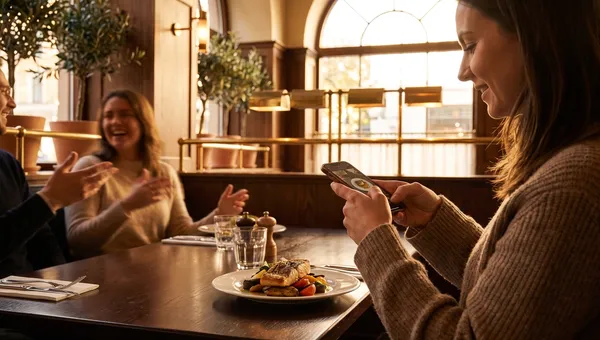
- QR and dine in ordering, so guests order from the table with no app download. This is the same infrastructure as scan to order at the table.
- POS and kitchen integration, so an online order reaches the right station without anyone re-typing it.
- Every fulfilment type in one queue: pickup, delivery, curbside, and scheduled orders.
- Customer data you own, feeding email, SMS, and loyalty you control.
- Real multilingual support, which in mixed markets means Arabic and English side by side, not a machine translated menu.
Commission free online ordering in the UAE
Gulf restaurants feel the commission problem harder than most, because aggregator penetration in Dubai and Abu Dhabi is high and the delivery habit is deeply established. A UAE restaurant that grew up on the apps often finds that most of its delivery revenue arrives through a channel taking a quarter of it, with the customer list sitting on someone else's server.
Move a third of your delivery volume to your own channel and the math changes fast. A Dubai restaurant doing 120,000 AED a month on the apps pays about 30,000 AED in commission. Shift 40,000 of that to direct ordering and you keep roughly 10,000 AED a month that used to be commission, minus a few hundred in subscription and about 2.5 percent in card fees. The apps still earn their place for discovery. They just should not own your regulars.
Zaid Widyan, Founder, Quickbuy
Three things matter locally that generic guides skip. Your ordering page and receipts need clean Arabic and English, not one bolted onto the other. Your checkout should carry the payment methods people actually use here, card and contactless wallets, with cash on delivery still worth supporting. And your receipts have to satisfy the UAE Federal Tax Authority's VAT rules; we covered compliant tax invoices in the UAE restaurant VAT guide. Our overview of restaurant tools built for the UAE covers how the local stack fits together.
How do you choose the right system?
Six steps, in this order, keep the decision honest:
- Map your fulfilment types. Pickup, delivery, curbside, dine in QR. Do not pay for channels you will never run.
- Do the commission math on your real numbers. Take last month's marketplace revenue, multiply by the commission rate, and compare against a flat subscription plus card fees. The answer is usually not close.
- Check POS and hardware compatibility before you commit, including printers and any kitchen display you already run.
- Place a test order on your own phone. If it takes more than a minute or feels clunky, your guests will abandon it too.
- Ask about support hours and menu migration. Downtime during a switch costs real money, and a support desk in the wrong timezone is a support desk you do not have.
- Plan for the second location. If a second site or brand is plausible, pick something that scales without re-platforming. This is where proper order management across locations earns its keep.
Common mistakes restaurants make
- Treating marketplaces as the whole strategy, leaving both margin and customer data on the table.
- Buying a system that does not integrate with the POS, so staff re-key every online order during the rush.
- Ignoring the mobile checkout. Most orders happen on a phone, and a slow one quietly kills conversion.
- Launching the direct channel and never telling anyone: no link on receipts, no signage, no social post.
- Discounting on the marketplace and not on your own channel, which trains regulars to order the expensive way.
Frequently Asked Questions
Which restaurant online ordering platform has the lowest fees?
Flat subscription, commission free platforms carry the lowest cost per order at any real volume, because you pay a fixed monthly price plus roughly 2 to 3 percent card processing instead of 15 to 30 percent commission. Below about twenty orders a week, a marketplace or a free tier can still work out cheaper.
What commission free online ordering solutions exist?
Commission free means a flat subscription rather than a percentage of sales, and several direct ordering platforms now sell on exactly that basis, Quickbuy among them. Check the fine print: some advertise commission free but recover it through mandatory payment processing at above market rates.
What is the best online ordering software for QSRs?
For quick service, prioritise throughput over feature count: fast repeat ordering, deep POS and kitchen routing, kiosk and curbside support in the same queue, and proven stability during a lunch spike. A platform that handles 300 tickets in two hours without a manual re-key beats one with a longer feature list.
How much commission do third party delivery apps charge?
Published merchant terms vary by market and by the package a restaurant signs, but the working range is roughly 15 to 30 percent per order, with extra fees for delivery, payment handling, or promoted placement on top. Always price your own agreement rather than the headline rate.
Can customers order without downloading an app?
Yes, and they strongly prefer to. Modern systems use a mobile web page or a QR menu, so guests scan, browse, and pay in the browser with no download. Removing that install step is one of the biggest single reductions in checkout drop off available to you.
Do I still need third party delivery apps?
Most restaurants keep them, and that is a sound decision. Use marketplaces for discovery and reach, then move repeat customers to your own channel with receipt inserts, packaging inserts, and a better loyalty offer. Reach from one, margin from the other.
How long does it take to set up online ordering?
With an existing menu, most single location restaurants launch within a few days, and the menu build is the long pole rather than the technology. Connecting payments and testing the POS handoff usually takes another day or two before you promote it publicly.
Take control of your online orders
Online ordering is a core revenue channel now, and the platform you pick decides how much of that revenue survives the trip to your bank account. The math is not subtle: a quarter of every marketplace ticket against a flat monthly fee. Run the numbers on your own last month before you renew anything.
If you want commission free ordering, QR dine in, payments, and a POS arriving as one system rather than four contracts, that is what Quickbuy is built to do. See plans and pricing, or book a short demo on your own menu.