Most restaurants don’t have a marketing problem. They have a radius problem. The people most likely to eat with you tonight live or work within a few miles of your front door, and a good number of them still have no idea you exist. Working out how to market your restaurant locally is mostly about closing that gap cheaply and repeatedly, without an agency retainer.
This is the playbook I’d run in a new neighborhood, in order: claim the free listings that already get search traffic, build a review habit into service, use social media for the street you’re actually on, then own the guest data so you’re not renting your customers from a delivery app. None of it needs a marketing hire. Most of it needs an hour a week and someone who cares.
Start With Your Real Trade Area
Before you spend anything, define the box you’re competing in. For most independents that’s a 3 to 5 mile drive radius, or a 15 minute walk in a dense city. Everything you do should point inside that box. A follower on another continent is a vanity metric. A follower who works two blocks away is a lunch order.
Write down the three or four places your ideal guest already spends time: the office towers, the gym, the university, the hotel, the residential blocks behind you. That list becomes your target for partnerships and geo-targeted posts later. If you want the wider view first, our guide to restaurant marketing strategies covers the channels that work beyond your immediate neighborhood.
How to Market Your Restaurant Locally, Starting With Google
Local search is the highest-intent free traffic a restaurant can get. Someone typing “restaurants near me” at 12:40 isn’t browsing, they’re deciding. Your Google Business Profile is what decides for them, and most restaurants leave half of it empty.
Fill in the fields guests actually search by
Google matches queries against the details in your profile, so every gap costs you appearances in the map pack.
- Exact primary category, not “restaurant” but “Lebanese restaurant” or “breakfast restaurant”, plus secondary categories.
- Hours, including holiday hours. Wrong hours is the fastest way to lose a walk-in and earn a one-star review in the same evening.
- The attributes guests filter on: outdoor seating, delivery, halal, vegetarian options, wheelchair access, wifi.
- Twenty or more real photos: the room, the food, and the front of the building at night so people can actually find the door.
- A menu link and an ordering link that point at your own site rather than an aggregator.
Post to your profile every week
Profile posts are close to free local advertising and almost nobody uses them. One a week is enough: today’s special, a new dish, the fact that you’re open on the public holiday. It takes five minutes on a phone, and it keeps the listing looking alive to both Google and the person reading it.
Make Reviews a System, Not an Accident
Reviews move local ranking and they decide whether someone picks you over the place next door. The mistake is treating them as something that happens to you. Build the ask into service instead.
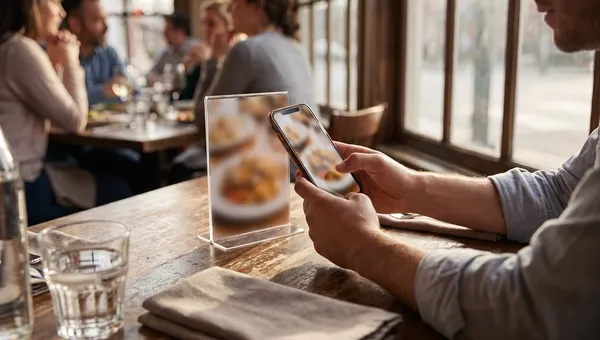
The best moment is while the guest is still at the table and visibly happy, right after you clear the mains. A card on the table or the QR menu they scan at the table can carry the review link, so the ask doesn’t depend on a server remembering.
- Ask every satisfied table, not only the ones who compliment the food out loud.
- Reply to every review inside 48 hours, good or bad. Short, public, no defensiveness.
- For a bad review, own it publicly in two sentences and move the detail to a private channel.
How to Market a Restaurant on Social Media Locally
Local social isn’t about follower counts. It’s about being recognizable to a few thousand people who live nearby, and that changes what you post and who you post with.
Geotag everything. Use the neighborhood name in captions, not just the city. Reply to comments from local accounts. When the gym or the office across the road posts about lunch, be in the replies like a neighbor instead of a brand.
How to use social media for restaurant marketing without hiring a creator
You don’t need a content team. You need a weekly rhythm a manager can run in twenty minutes.
- One dish video a week, filmed on a phone in natural light near the window.
- One story of the room filling up during service, so the place looks busy to people deciding where to go.
- One repost of a guest’s photo, with credit. Guest content outperforms studio shots and costs nothing.
- One post that answers a real question: parking, whether you take walk-ins, what’s actually vegetarian.
Then invite three or four genuinely local micro-creators, a few thousand followers in your city rather than influencers with global audiences. Local reach beats national reach every time for a business that only serves one postcode.
Work the Street You’re Actually On
Offline still wins in a trade area this small. The cheapest customers you will ever get are the ones already walking past your window.
- Trade offers with non-competing neighbors: the gym, the cinema, the barber, the hotel front desk. Their staff and members become your regulars.
- Feed the local teams. Sponsoring an amateur league or a school event costs less than a week of paid ads and buys goodwill that ads can’t.
- Make your window work. A legible sign with today’s dish and its price converts better than any billboard you can afford.
- Host something on a slow night: a quiz, a supplier tasting, a community group meeting. An empty Tuesday is inventory you can’t store.
Own Your Guest List Instead of Renting It
Aggregators will happily bring you a customer once and keep the relationship afterwards. Every local campaign should end with a guest you can contact directly next month, which means capturing the order on your own channel.
Direct ordering, a phone number and an email address are what make marketing compound. Once you have a list, a restaurant loyalty program and a few simple win-back messages do more for revenue than chasing new customers every month.
If you’re picking tools, restaurant CRM software is where that guest data should live. And keeping your menu current across every channel matters more than it sounds: the offer you advertised has to be the offer they actually see.
Track What Actually Fills Tables
Local marketing usually gets abandoned because nobody measured it. You don’t need attribution modeling. You need to know which nights got busier and which channel the orders came through.
Check four numbers a month in your restaurant analytics: covers by day of week, direct orders as a share of total orders, repeat guest rate, and average ticket. If a tactic hasn’t moved one of those in 60 days, drop it.
- Use a different offer code per channel so you can tell the flyer from the Instagram post.
- Watch profile views and direction requests in your Google Business dashboard as an early signal, before covers move.
- Ask new guests how they heard about you and write the answer down. A small sample still beats guessing.
Your First 30 Days
- Week 1: complete your Google Business Profile end to end and add twenty photos.
- Week 2: put a review ask into service and reply to every review you already have.
- Week 3: start the weekly social rhythm and geotag every post.
- Week 4: sign two neighbor partnerships and switch on direct ordering so you keep the guest data.
Then run month two the same way with those four numbers in front of you. Local marketing rewards the boring version of consistency, not the clever version.
Frequently Asked Questions
How do I market my restaurant with no budget?
Start with the free assets that already carry local search traffic: your Google Business Profile, your reviews, and organic social. Completing the profile, posting weekly, and asking every happy table for a review costs nothing but time, and it usually moves covers inside a month or two. Paid ads belong after those are working, not before.
Does social media bring in diners?
Yes, though mostly as a recognition and reminder channel rather than a direct booking engine. Locals who follow you order more often and choose you faster when they’re deciding. Treat it as a way to stay familiar to a few thousand nearby people and judge it on repeat visits, not likes.
How long does local restaurant marketing take to work?
Expect small movement in three to four weeks and something you can see clearly in the numbers by month three. Profile changes and reviews tend to show up fastest. Partnerships and loyalty compound more slowly but last much longer.
What is the single best local marketing channel for a restaurant?
For most independents it’s the Google Business Profile and reviews combination, because it catches people at the exact moment they’re choosing where to eat nearby. Everything else works better once that one is in place.
Fill More Tables With Quickbuy
Local marketing works when the guest can act immediately and you keep the relationship afterwards. Quickbuy gives you that direct channel: QR menus and scan to order at the table, commission-free online ordering on your own domain, and the guest data sitting behind both. Pair it with the ways to increase restaurant revenue you’re already working on and every local campaign has somewhere to land.
Have a look at Quickbuy pricing or book a walkthrough, and we’ll get your ordering page and QR menus live in an afternoon.